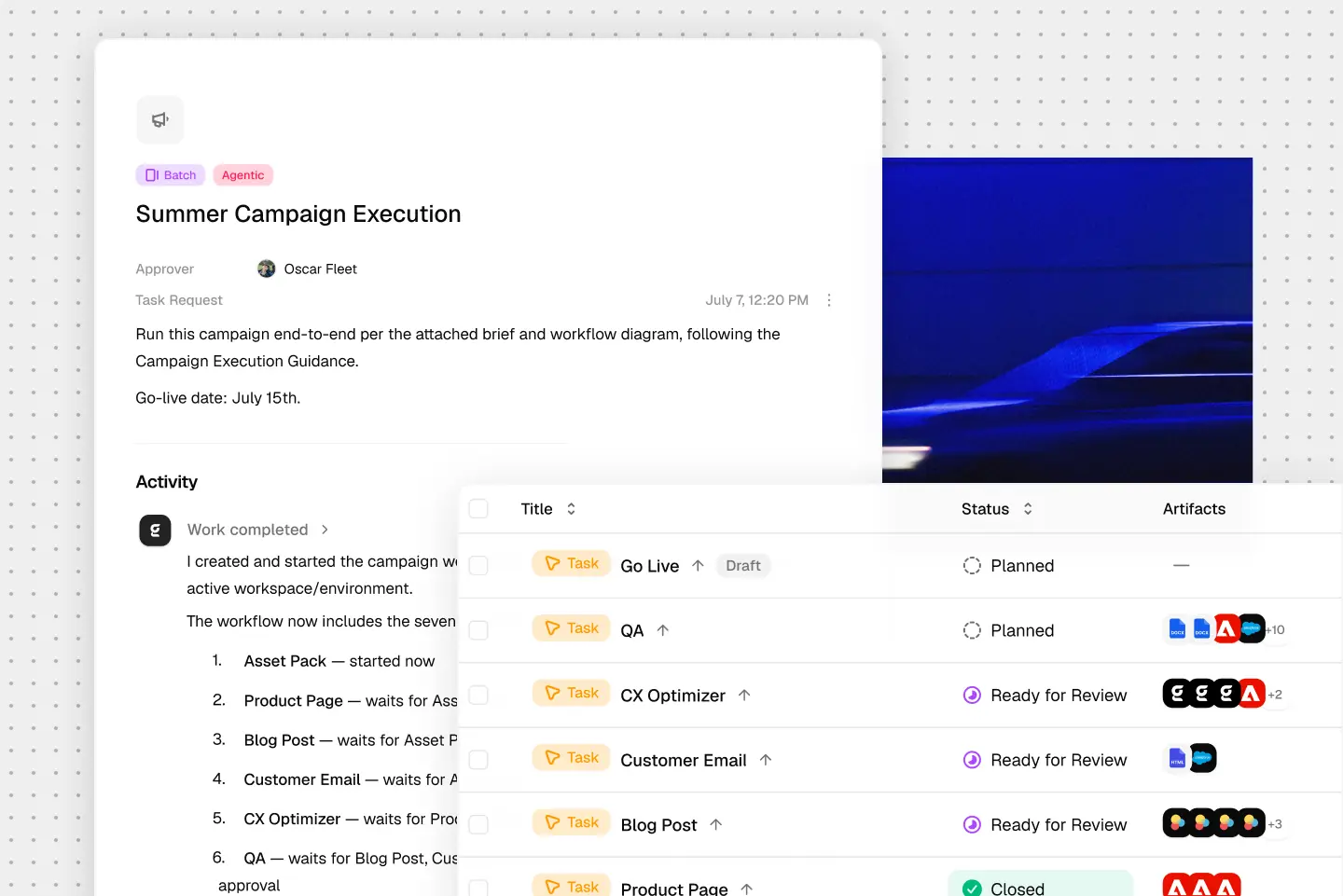


1. Frame the job
Structure the objective, audience, offer, messages, channels, placements, markets, source assets, standards, and accountable reviewers into a usable creative brief.
The concept is rarely the constraint. Each stage carries campaign context, source material, placement and market requirements, and review history forward, while accountable people retain craft, risk, sign-off, and release decisions.
Structure the objective, audience, offer, messages, channels, placements, markets, source assets, standards, and accountable reviewers into a usable creative brief.
Prepare headlines, descriptions, calls to action, imagery, and video from the agreed direction and available source material within the configured workflow.
Adapt copy length, format, dimensions, crops, and asset combinations for the placements defined in the media plan.
Create audience and market versions using approved terminology, local requirements, audience context, and the review path defined for each version.
Run configured quality checks, surface exceptions, and route the assembled work to named reviewers before anything moves toward activation.
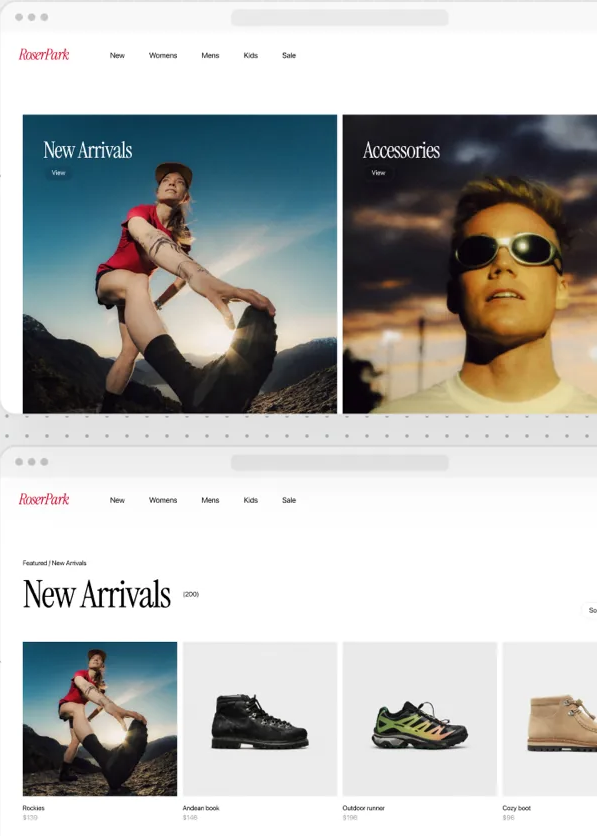
Gradial handles repeatable production across copy, imagery, video, formats, and versions. The exact systems, generation steps, formats, and activation path depend on the customer environment and configured workflow.
Evaluate in-scope language and creative against approved terminology, messaging, visual direction, production requirements, and supported accessibility criteria.
Route exceptions and risk decisions to the responsible creative, brand, accessibility, legal, channel, or market reviewer rather than guessing.
Named reviewers decide what passes and what can continue. Publication and activation remain distinct actions controlled by the configured workflow.
Connect inputs, versions, changes, checks, comments, and sign-off so teams can trace how each output reached its current state.