

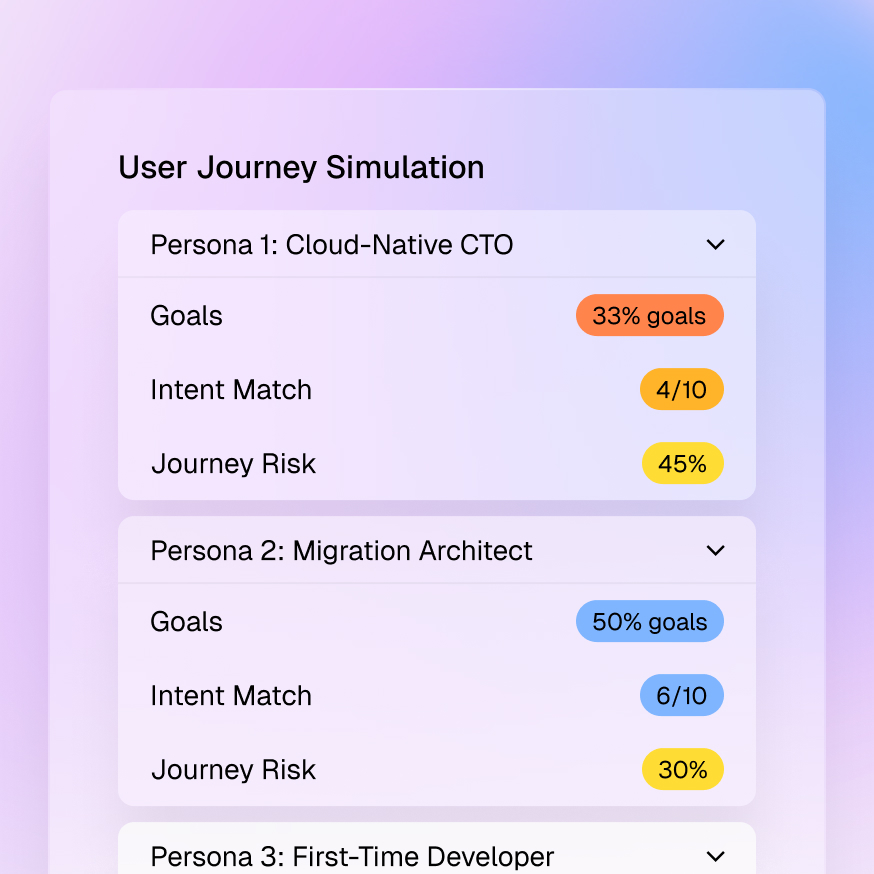
More segments than experiences
Teams can define hundreds of useful audiences, but most still receive the same page and the same message because production cannot match the segment count.
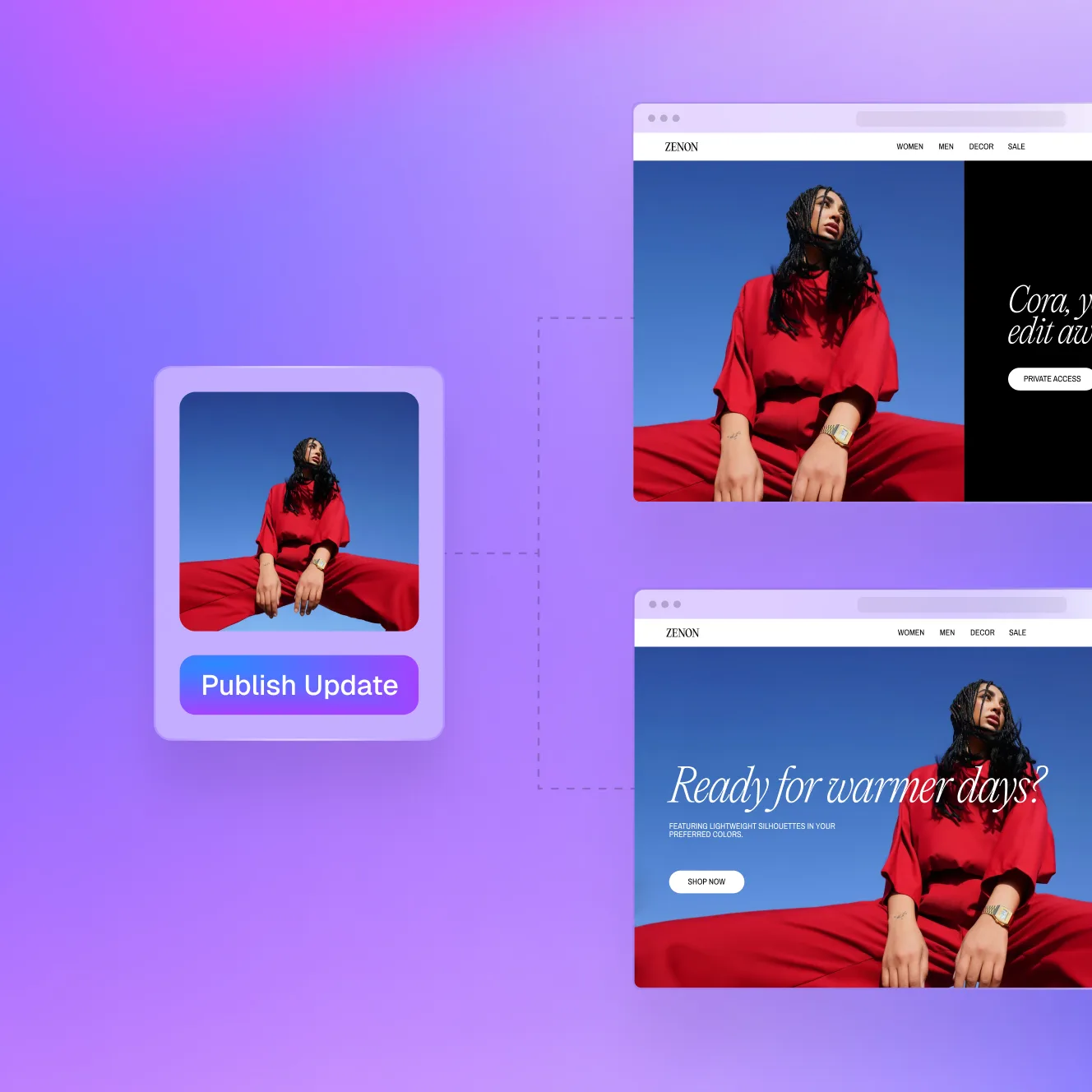
Teams can define hundreds of useful audiences, but most still receive the same page and the same message because production cannot match the segment count.
Performance data identifies which audience, message, offer, and channel need attention, but the insight often stops before new work is made.
Every landing page or email variant restarts the same chain across content, creative, design, development, review, publishing, and audience setup.
When volume and velocity stay low, marketers choose broad campaigns over granular relevance because the organization cannot produce enough distinct experiences.
Personalization stalls because every new audience creates another content and creative brief, another page and email build, another QA and approval cycle, and another audience mapping. Gradial does that production work in minutes, so teams can reach smaller segments with relevant messages while the opportunity is still live.
Combine the audience definition with behavioral, geolocation, real-time, campaign, and conversion signals so each experience starts from a concrete opportunity.
Gradial develops the message, offer, content, and creative requirements for each audience, using account context, approved patterns, brand rules, and prior performance.
Agents assemble landing pages, emails, modules, metadata, and assets in the connected CMS and email platform, then run brand, accessibility, QA, and organization-defined compliance checks.
Approved experiences connect to the intended audience and launch through the configured workflow. Performance feeds the next message, offer, page, or email without restarting the production chain.
Gradial uses audience behavior, campaign performance, conversion, market context, and journey friction to identify which audience and message need a new experience now.
Gradial creates the landing pages, emails, modules, metadata, and creative variants that audience needs using your design system, approved content, assets, and brand rules.
Gradial moves each variant through the CMS, email platform, audience setup, review, approval, and launch without losing context or creating another handoff chain.
Gradial uses performance results to shape the next audience plan, message, offer, page, and email so each cycle starts from what worked.

Prudential uses Gradial as a digital coworker in content authoring to help deliver personalization at scale. The published program reports 10x faster web page creation and describes evaluative agents being tested inside the workflow for legal, regulatory, brand, and voice review.
Gradial applies your brand, accessibility, QA, legal, regulatory, and operational rules while pages and emails are created and revised.
Gradial fixes safe issues, flags judgment calls, and routes the right work to the right reviewer before launch.
Gradial records the changes, checks, reviews, and approvals behind each audience experience so teams can see what happened and why.
Gradial connects the CMS, audience and data systems, asset library, design tools, email platform, and work management systems involved in personalization. Available connections depend on the customer environment and implementation.
AEM Sites & Assets
Sitecore
Contentful
Adobe AEP
Snowflake
Bynder
Figma
Jira
Because defining the audience is only the start. Each segment still needs a message, offer, landing page, email, creative, approval cycle, build, audience mapping, launch, and performance review. Gradial does that work so the number of live experiences can finally match the number of useful audiences.
Gradial applies organization-defined legal, regulatory, brand, accessibility, and QA criteria while variants are built. Human reviewers stay on judgment calls and approvals instead of manually checking every production step.
No. Audience data and decisioning remain in their source systems, content is built in the connected CMS and email platform, and approved experiences move through the configured delivery workflow. Gradial connects and executes across the stack.
No. Server-side or first-response delivery depends on the serving technology and implementation. Gradial can prepare and activate governed variants through the customer environment without requiring one delivery architecture.