
All blogs
GuideAug 10, 2026
Localization Workflow Automation: Scale Market-Ready Content with Control
Gradial
Localization Workflow AutomationContent Supply Chain AutomationEnterprise MarketingMarketing Operations
Seven controls turn translation into a market-ready experience: source, terminology, variation, structure, assets, quality, and local approval. Localization automation connects those controls so regional teams receive stable work with the context needed to decide only the exceptions.
This guide covers the market adaptation layer of content supply chain automation. It focuses on the workflow mechanics beyond text translation.
Classify variation before sending work
- Direct translation: Meaning and structure remain stable across languages.
- Transcreation: The idea remains, but wording and creative expression adapt.
- Legal adaptation: Claims, disclosures, privacy, or regulated text vary by market.
- Product variation: Availability, naming, features, offers, and support differ.
- Local discovery: Search terms, metadata, examples, and source ecosystems change.
- Market assets: Imagery, screenshots, talent, packaging, and rights require local variants.
The localization workflow
- Freeze source: Identify the approved version, owner, reusable fields, and protected text.
- Attach context: Provide terminology, style, audience, product, legal, design, and prior feedback.
- Plan variants: Separate inherited, translated, transcreated, market-owned, and derived fields.
- Execute in structure: Create locale variants in the CMS and DAM without breaking references or inheritance.
- Run local QA: Check language, meaning, truncation, directionality, links, metadata, assets, and layout.
- Route exceptions: Send only unresolved market decisions to regional, brand, legal, product, or release owners.
- Manage deltas: Propagate later source changes and show which locales require action.
Build a localization handoff that preserves context
| Package element | Purpose | Owner |
|---|---|---|
| Source manifest | Defines approved version and changed fields | Global content owner |
| Terminology and style | Preserves product language, brand, and audience tone | Brand and localization |
| Market rules | Captures legal, product, offer, and channel variation | Regional owner |
| Asset plan | Identifies inherited, localized, and restricted media | Creative and DAM owner |
| QA checklist | Defines linguistic, visual, technical, and accessibility evidence | Localization operations |
| Release map | Connects locales, dependencies, approvers, and timing | Release owner |
How Gradial orchestrates localization
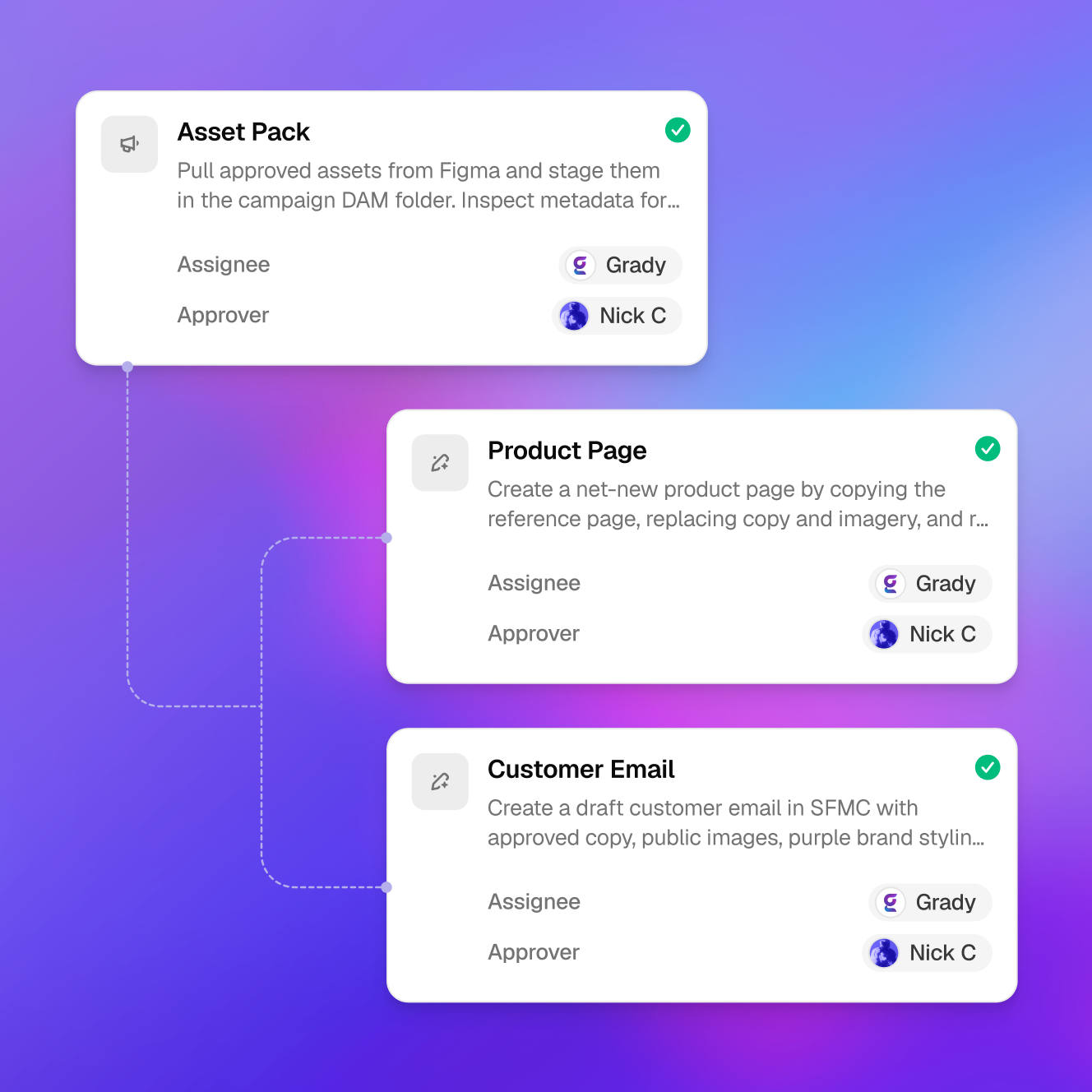
- Source-controlled tasks: Gradial gives each locale the approved source version and exact delta.
- Market-aware context: Gradial carries terminology, brand, product, legal, design, and prior feedback into execution.
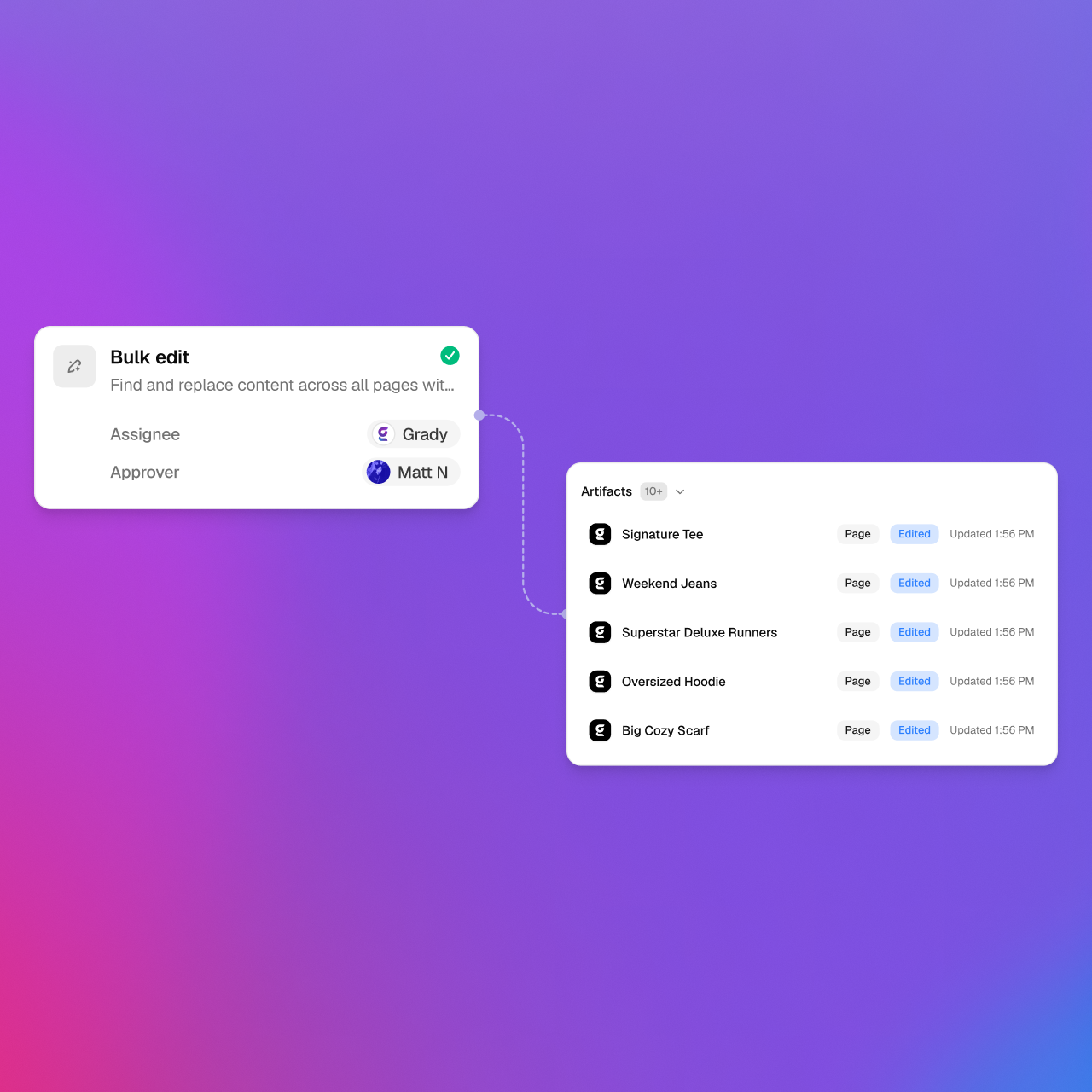
- Structured variant creation: Gradial agents can prepare locale content and asset changes in supported destination systems.
- Exception-based review: Local reviewers receive unresolved decisions and rendered proof rather than a full restart.
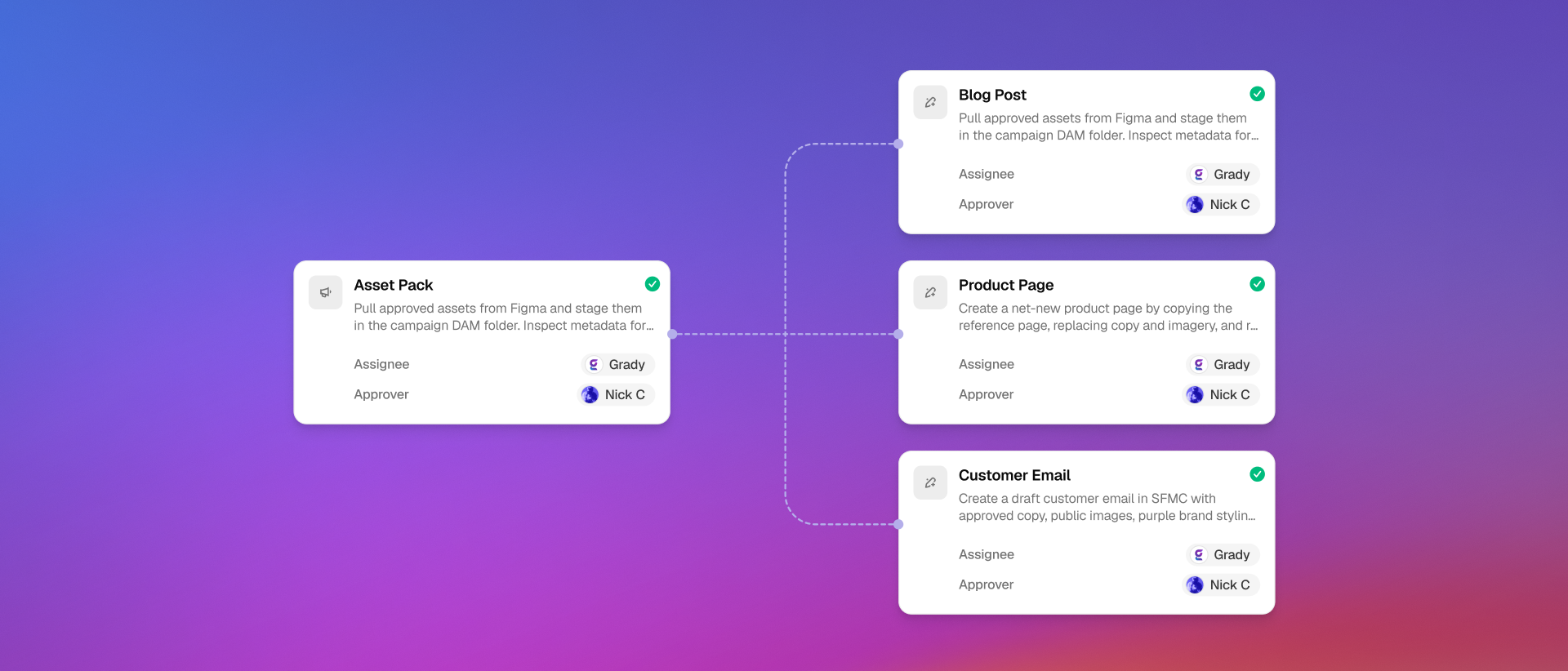
- Dependency-aware release: Global and market approvals remain visible before locale content advances.
Measure market-ready outcomes
| Metric | Before | After |
|---|---|---|
| Time from source freeze to market approval | Baseline by locale | Target after structured handoff |
| Locale rework after source change | Baseline by release | Target after delta management |
| First-pass local approval | Baseline by content type | Target after context packaging |
| Rendered localization defects | Baseline by market | Target after local QA |
Measure one recurring content type across a representative set of markets before expanding.
What governed localization produces
- One approved source with explicit market variation rules.
- Structured locale variants with terminology, assets, and lineage intact.
- Local approval focused on genuine market exceptions.
- Coordinate market approvals: Connect local decisions to bounded release.
- Measure localization performance: Track quality, rework, cycle time, and audience outcome.
- Map a localization workflow: Start with one source and a representative market set.