

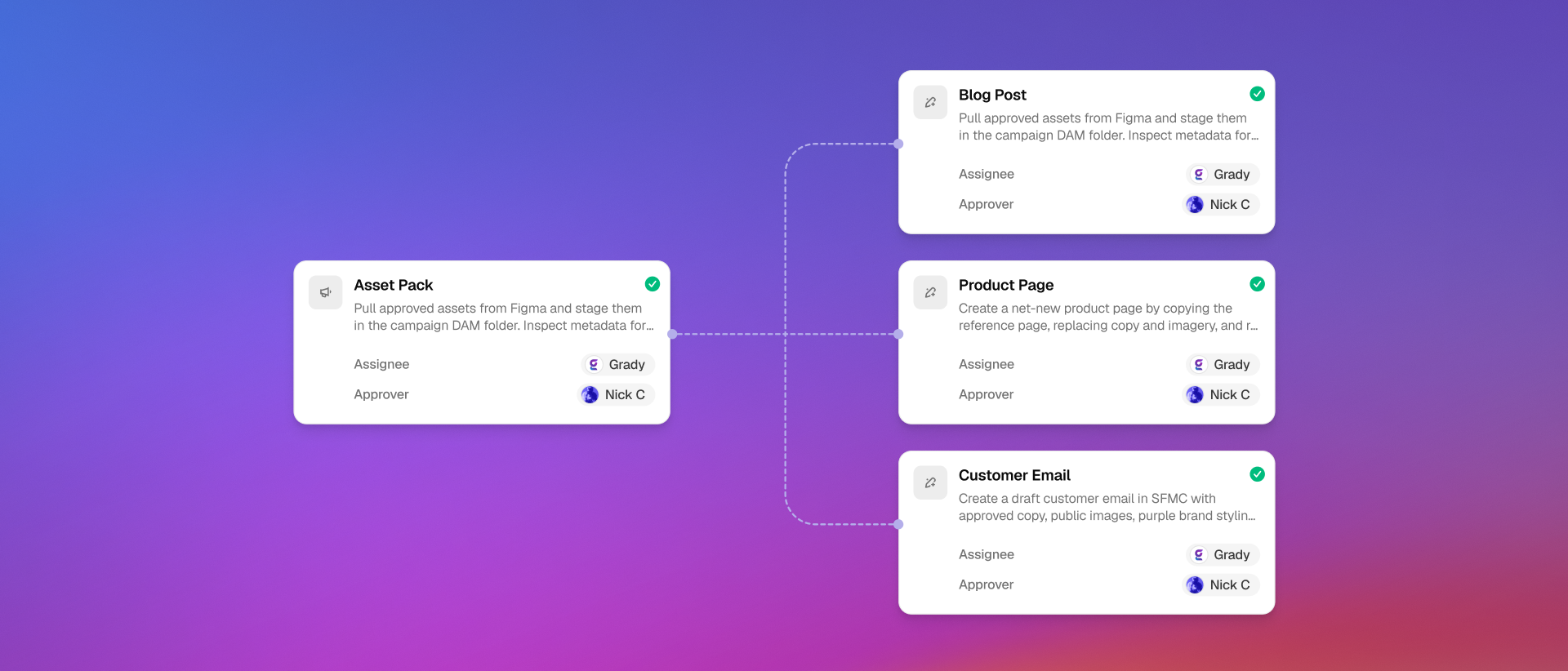
Human Oversight for Marketing AI Agents: Approval, Authority, and Intervention Design
Eight oversight decisions determine whether a marketing AI agent remains useful and accountable: scope, permission, evidence, review, exception, intervention, release, and recovery. Human oversight works when people retain meaningful authority over outcomes, not when they repeatedly approve opaque agent actions.
This guide is a research cluster within the Enterprise Marketing Harness. For broad evaluation, use the Marketing Harness Evaluation scorecard.
What meaningful human oversight means
Meaningful human oversight is the operating design that lets people understand, challenge, redirect, approve, stop, and recover agent-executed work. It combines decision rights, workflow context, evidence, timing, reviewer capacity, and enforceable technical controls.
A human is not meaningfully in control if the decision arrives too late, the evidence is incomplete, the choices are unclear, the action cannot be stopped, or the reviewer is expected to approve more work than they can reasonably evaluate.
Why approval fatigue weakens control
Approval fatigue appears when review volume grows while decision quality stays flat. Common causes include:
- Every action receives the same approval requirement regardless of impact.
- Reviewers receive the full workflow instead of the exact decision.
- Evidence is scattered across tickets, documents, previews, and system logs.
- Approvals happen after consequential actions are difficult to reverse.
- Routine approvals crowd out the exceptions that need judgment.
Recent research discussions warn that repeated low-value approvals can increase automation bias, reduce situational awareness, and weaken the reviewer skills the system depends on.
Define decision rights before agent execution
| Decision | Agent role | Human authority |
|---|---|---|
| Plan | Propose scope, steps, dependencies, and evidence | Approve objective, constraints, and definition of done |
| Prepare | Draft, assemble, transform, classify, or analyze | Review sensitive sources, claims, creative, and exceptions |
| Execute | Apply bounded changes in supported systems | Control permissions, environments, budgets, and protected actions |
| Release | Prepare candidate, checks, and evidence | Approve release scope and activate customer impact |
| Recover | Identify affected units and propose repair | Choose rollback, repair, or risk acceptance |
Match oversight to workflow risk
Not every action needs the same review.
- Low impact and reversible: Allow bounded execution with automated checks and sampled human review.
- Moderate impact: Require review of changed fields, evidence, exceptions, and the rendered result before the workflow advances.
- High impact or difficult to reverse: Require named approval before execution or release, with explicit scope, preview, recovery, and audit evidence.
- Unclear authority: Stop and route the decision rather than allowing the agent to infer permission.
Risk should reflect customer impact, financial consequence, legal sensitivity, data access, brand exposure, reversibility, and the organization’s own policies.
Build an approval package reviewers can use
A strong approval package answers seven questions:
- What outcome was requested?
- Which approved sources and rules were used?
- What exactly changed?
- Which checks passed, failed, or remain uncertain?
- What does the customer-visible result look like?
- Which exceptions or tradeoffs require judgment?
- What decision, scope, and recovery path are being approved?
This makes approval a decision about a bounded outcome instead of a request to reconstruct the work.
Design intervention before the agent needs it
Human control must exist inside the execution path.
- Define stop conditions for missing sources, conflicting rules, unexpected scope, permission failure, quality thresholds, and cost limits.
- Provide pause, redirect, edit, reject, retry, and rollback paths.
- Keep protected credentials and final authority outside the agent’s control.
- Make the current state, next action, and responsible owner visible.
- Test recovery during pilots rather than assuming it will work during an incident.
Protect reviewer capacity and skill
Oversight is a scarce operating resource. Measure it and design for it.
- Route routine checks to deterministic controls.
- Group related evidence into one decision package.
- Assign reviewers by subject, risk, market, and authority.
- Limit simultaneous approval load.
- Use calibration reviews to compare human decisions and refresh standards.
- Track whether reviewers can identify planted errors, challenge agent recommendations, and explain approvals.
Research signals and source notes
These sources informed the guide direction. They summarize recent public discussion and should be checked against primary papers or projects before publication.
What meaningful human oversight produces
- People understand the decision, evidence, impact, and available actions.
- Routine work advances without turning every step into an approval queue.
- High-impact actions remain bounded by enforceable human authority.
- Reviewers can intervene before customer impact and recover affected work.
- Exceptions improve the harness, guidance, and evaluation over time.
Explore the Marketing Harness | Evaluate a Marketing Harness | Map an oversight workflow