







1. Establish product truth
Confirm product identifiers, titles, availability, offer terms, claims, imagery, destination URLs, markets, and the source that governs each field.
Gradial coordinates the work that surrounds retail media campaigns: catalog inputs, creative production, campaign readiness, landing experiences, review, and measurement. Specialists keep authority over strategy, platform access, spend, legal judgment, and launch.
A campaign can have the right audience, placement, and offer and still stall because the product record changed, the creative does not match the destination, or launch evidence is scattered across teams. Gradial creates one reviewable operating path around those handoffs so each owner receives the context, work, and decision they need.
Each moment has a distinct owner and output. Gradial carries the source context and evidence forward so readiness does not have to be reconstructed at every handoff.

Confirm product identifiers, titles, availability, offer terms, claims, imagery, destination URLs, markets, and the source that governs each field.
Turn audiences, placements, formats, schedules, budgets, and bidding direction into scoped production and setup requirements for specialist review.
Coordinate copy, imagery, placement variants, localization, and landing-page content against the same product and campaign direction.
Attach quality checks, destination validation, open issues, platform inputs, and the requested approval to one review package.
Separate observed campaign and experience data from interpretation, then turn accepted recommendations into the next governed change.
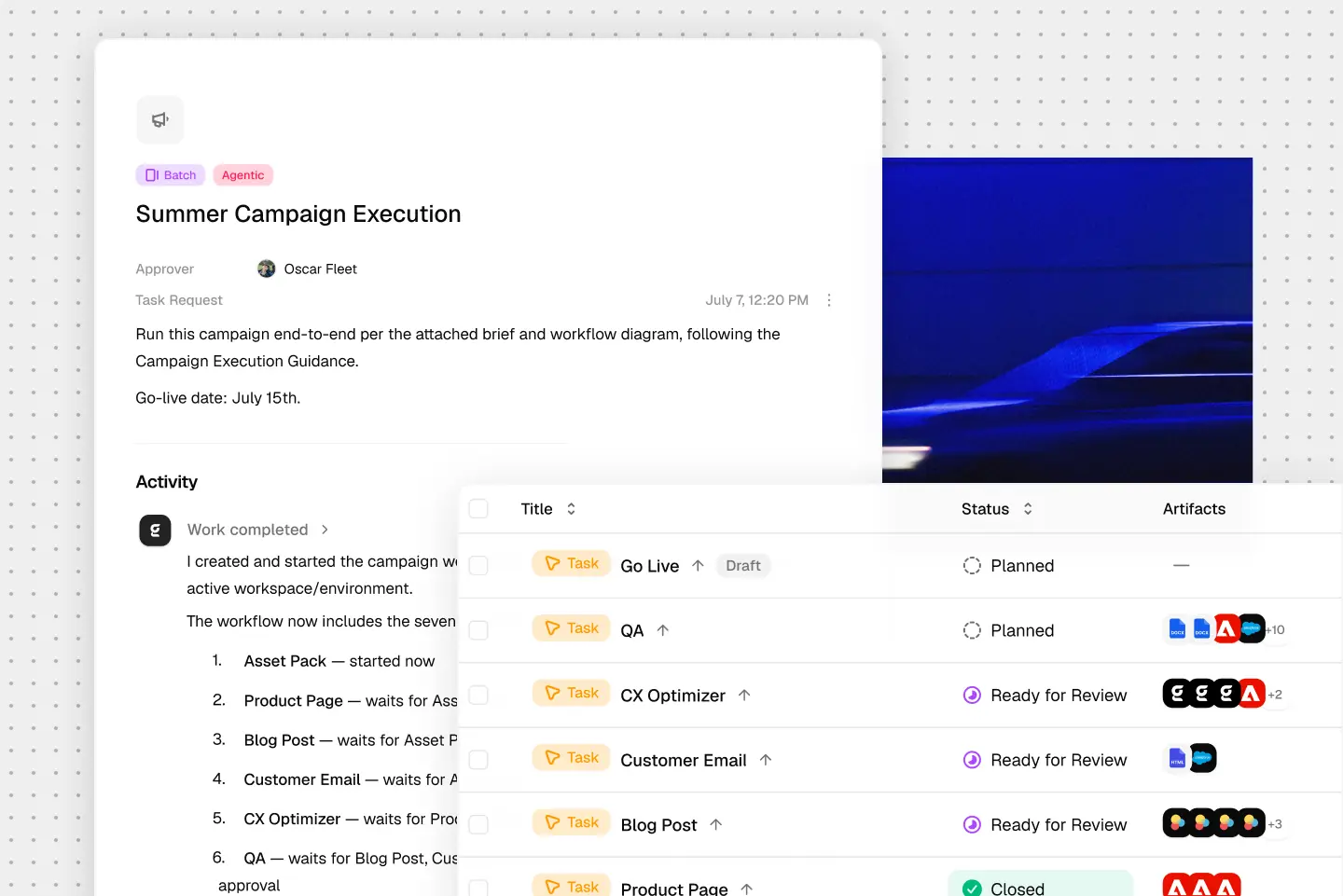
Catalog coordination, creative production, and landing-page authoring are treated as one experience problem. When an offer, claim, image, or destination changes, the affected work can be identified and reviewed together.
Apply brand, content, accessibility, metadata, link, destination, and launch-readiness checks while issues are still repairable.
Set the objective, conversion event, reporting window, source data, owner, and review threshold before interpreting performance.
Present measured results separately from hypotheses. Execute only the changes the accountable owner accepts.
Retain inputs, exceptions, changes, approvals, and review history with the work.