















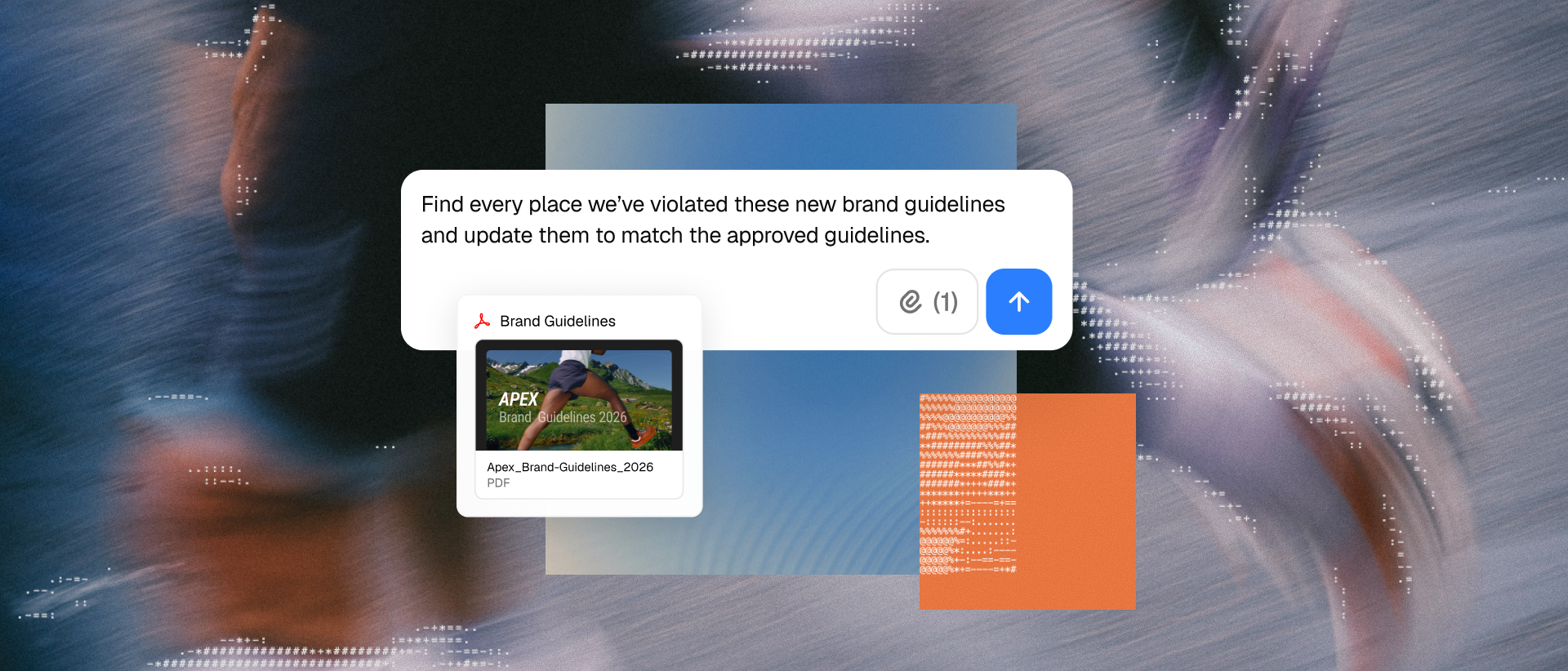
At Gradial, I lead Brand and Creative with one goal in mind: we think about what agents can handle, so marketers spend their time making work that sparks human emotion and connection.
When we talk about that kind of creative, great creative, it’s not good enough for it to be “on-brand.” The work has to live the brand, too.
Don’t get me wrong: the right typeface, brilliant color choices, and a unique tone matter. And work can get all of those things right and still not make someone feel something. On-brand should be a requirement, but living the brand should be the quality bar.
On-brand is where the bar starts
Brand guidelines are truly one of my favorite things. Thoughtfully chosen color names? Complementary serif and sans serif fonts? Little Easter eggs hidden throughout? There’s not much better for a designer. Practically, they tell a company how to show up, consistently and authentically, everywhere in the market. The great thing about guidelines is just that: they’re guidelines, not rules carved into cement. When we treat them as the latter, they can become a substitute for more interesting conversations. Is an idea thought-provoking? Does the copy resonate with what customers experience? Does the tone sound like us because it expresses what we believe, or because we’ve used the same sentence 17 times before?
A perfectly placed logo, properly cropped images, and correct Pantone colors can’t answer those questions. The answers are what drive human connection.
If adhering to guidelines is our bar for quality, we risk that “good enough” is simply avoiding being wrong. A higher, and better, bar is “yes, and”: yes, we comply with the guidelines, and we make something truly worth paying attention to.
If you know me, you know that I thrive on consistency. I also want the idea that makes me pause, the headline that makes me laugh, and the image I can’t look away from. Great design, and great marketing, makes room for both.
Put the requirement where the work happens
The answer isn’t to disregard the guidelines and have a creative free-for-all. Instead, we need to separate the creative aspects that need to remain true and consistent, from the decisions that deserve more ideation and exploration. Both can get carried through the work.
I became a designer because I wanted to make something that made other people feel something: the book you pick up by an author you’ve never heard of because the cover is too intriguing to walk past, the movie poster you hang before you’ve seen the film. That feeling is the whole point of the next example.
Consider this: An outdoor brand is launching a campaign for people who are brand new to hiking. The company stands for making the outdoors feel approachable, and it’s not enough to say that the guidelines call for an “approachable tone.” The ambition of the work is to make someone (who has never even set foot on a trail) feel, “Hey, I could do that.”
The brand standards need to remain consistent throughout the campaign, while leaving room for the marketing team to find the spark: the big idea, the narrative that brings the new hiker that feeling of potential.
The production has to carry that big idea into every asset. A landing page might show friends enjoying a short local trail. If the social version swaps in a solo athlete on a dramatic summit, it could use the same palette, typeface, and logo treatment while sending a completely different message (one that doesn’t resonate with our newbie audience). Good production should do more than make sure that assets match channel formats and fit social specs; it preserves what made the idea right for the audience in the first place.
When the team approves the work, the reasoning needs to stay with it. If the local-trail image works because it makes a first hike feel achievable, the people creating the email and social versions need to know that, too, so they don’t have to repeat the process. (This is what we built Gradial’s skills and approval checkpoints to carry.)
That’s what I mean by governance traveling with the work. The guidance isn’t sitting in a document somewhere, waiting for someone to remember it. It’s helping the team make decisions from the brief through production and review, while leaving room for the marketing team to make the creative choices that truly matter.
Delegate the checks, not the point of view
It’s easy to determine that the goal is to “just produce more content,” but more content is only useful if it has a reason to be made in the first place. Don’t stop making more content. Make more, better content. Delegate the manual execution work to agents, so marketers drive the story and the creative that make the content worth making in the first place.
I’d start delegation with a contained task: consider adapting an approved concept for a specific channel, using the approved assets and stated brand requirements, and returning it for review. You decide where agents run with the executions, and where your team maintains ideation, control, and all-important approvals.
A useful handoff from agent to marketer should not only show what was created and how it aligned to requirements, but should proactively point out what’s unclear. Does the shorter headline lose an important nuance? Does the crop technically fit but remove the detail that made the image interesting? Those aren’t just details; they’re important decisions to be made with intention that impact the meaning of the work.
This way, the person reviewing the work can spend less time on the coordination and more time paying real attention to the work. Is this how we wanted to express our big idea? Does the campaign keep its meaning throughout the assets? Would our audience recognize themselves in the messaging?
People still own those calls, including when to purposefully defy an established brand guideline. The best brands allow for creative flexibility to maintain relevance, and that intentional exception needs a human decision.
The purpose of clearer controls is to make delegation possible, without turning every project into agentic bot-sitting. That balance depends on carrying the brand guidelines and relevant context through every stage of the work, then giving human reviewers a clear view of what was created, what was checked, and what still needs their judgment. Delegate the checks, not the point of view.
Don’t confuse an approval with an outcome
Of course, the review isn’t where the story ends. Our team can approve the work, but only our audience can tell us whether it means something to them.
Creative judgment is subjective. That’s the point, and, it’s also why it should be tested with real metrics and feedback.
In our example hiking campaign, that might mean testing the creative with first-time hikers, then analyzing their responses and actions. Did they feel welcome? Did they find a first step they could actually take? Those answers tell us something the brand checklist can’t: whether the idea connected with the people we made it for.
Make room for the work people remember
Brand consistency and great creative quality reinforce each other. It isn’t a zero-sum choice: agentic workflows can help carry brand standards and checks through the work, giving the team more room to focus on delighting customers. I don’t want to get rid of brand review (I love a good brand review). I want brand review to do its job well enough that it leaves more room for the ideas, stories, and conversations that made me want to be a designer in the first place.
Let’s start small. Take one brief, separate the requirements from the creative decisions, and follow one requirement from production to go-live. Notice if the requirement disappears, if someone has to explain it again, or if it gets mistaken for the entire definition of “good.”
Then fix that part. Not by adding a new approval, but by making sure the requirement, and the reason for it, travel with the work.
I still judge a book by its cover (just ask my favorite bookseller at Ridgecrest Books), but I’ve never picked one up based on its ability to match the imprint’s brand guidelines. I’ve definitely chosen one because someone made a creative choice that sparked curiosity, connection, and emotion.

Danielle Papes
Brand and Creative, GradialDanielle Papes leads Brand and Creative at Gradial. A graphic designer by background and a marketer at heart, she is passionate about work that moves people. She focuses on helping marketers make room for the ideas, creative judgment, and customer connections that make brands memorable.