Gradial home
The Hidden Cost of Waiting for the Perfect AI Strategy on a purple and blue gradient
All blogs
InsightsJul 29, 2026

The Hidden Cost of Waiting for the Perfect AI Strategy

A headshot of Jason Michaels
Jason MichaelsGM Industries — Communications, Media, & Technology
InsightsTechnology

AI Summary

  • Enterprise AI strategy should make architecture, data, permissions, ownership, and auditability stable.
  • The tools and execution capabilities above that foundation should remain flexible as the market changes.
  • Waiting for a perfect platform decision allows backlogs, manual work, and delayed returns to compound.
  • Gradial connects governed execution across the systems enterprises already use.

Every enterprise I talk to is wrestling with the same tension: build a rigorous AI strategy, or move fast enough to matter. Framed that way, it is a false choice.

The planning instinct is correct. Governance, security, data architecture, and clear ownership are not bureaucracy. They are the difference between AI that scales and AI that becomes the next audit finding.

The mistake is not planning. It is treating every part of the AI stack as if it needs to stay fixed for the same length of time.
The false choice between speed and control

CIOs are right to worry about tool sprawl, untraceable workflows, duplicated capabilities, and agents with no clear owner. CMOs are equally right to worry that a two-year platform decision can leave the organization solving yesterday's problem with tomorrow's budget.

Both concerns are valid because they apply to different layers of the operating model.

The durable foundation needs control. The execution layer needs room to change. When leaders force both layers into one planning horizon, they either move quickly without enough governance or govern so broadly that useful execution never starts.

Govern what should stay stable

The stable foundation should include the elements the enterprise cannot afford to improvise:

  • Architecture: where systems connect, which systems hold canonical state, and how information moves.
  • Data: what agents can access, how that data is protected, and which sources are authoritative.
  • Permissions: who or what can view, edit, approve, publish, and reverse a change.
  • Ownership: the accountable business and technical owner for each workflow and agent action.
  • Auditability: the record of what changed, why it changed, which rules were applied, and who approved it.

These controls should not depend on whichever model, tool, or point solution is popular this quarter. They are the load-bearing parts of the strategy.

Keep the execution layer composable

AI platforms and models are evolving too quickly for a multiyear technology roadmap to stay current in every detail. Enterprises need room, budget, and operating flexibility to adopt stronger capabilities as they emerge.

That does not mean bypassing governance. It means designing governance so new capabilities can enter through a controlled execution layer. The foundation defines the rules. The execution layer applies them while the underlying tools continue to improve.

This is where composability matters. Teams should be able to connect a new capability to approved data, permissions, workflows, and review gates without rebuilding the enterprise architecture or replacing the systems that already run the business.

The Undesigned Middle is where the cost accumulates

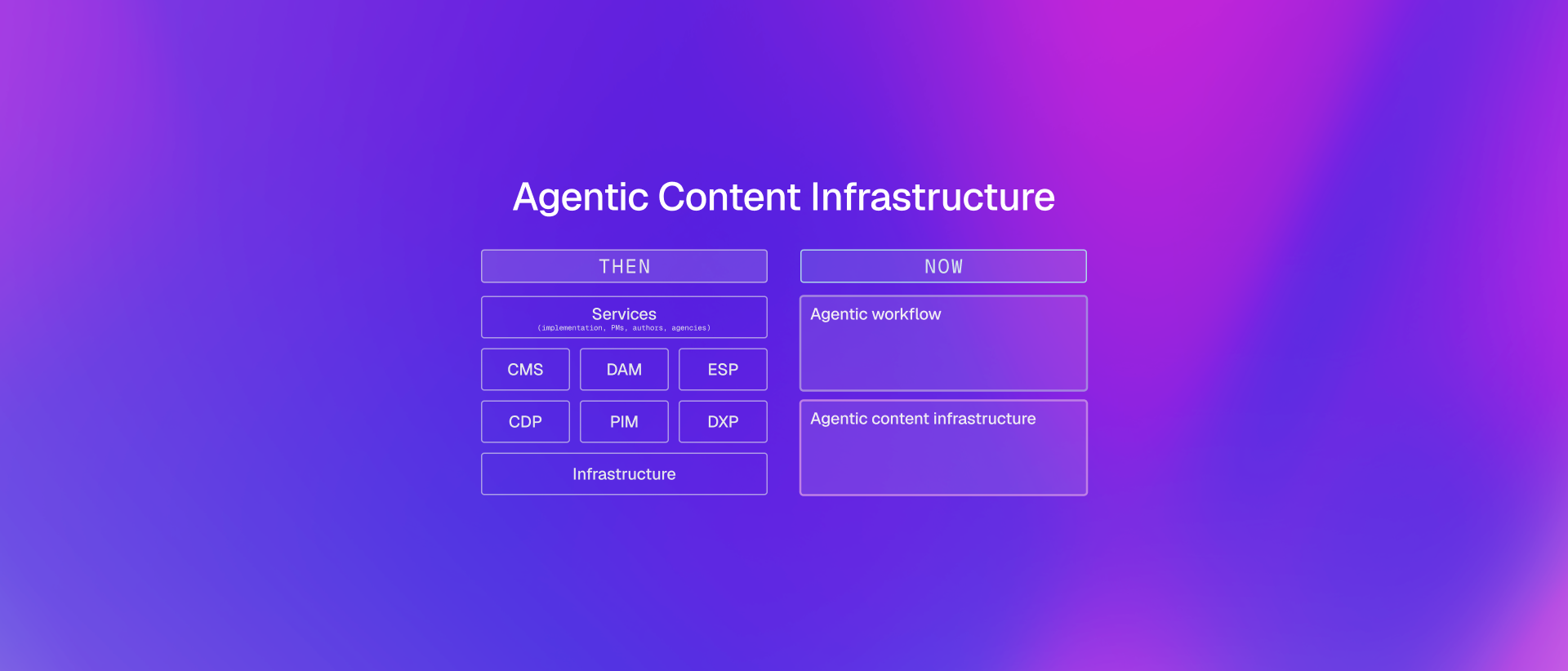
This flexibility is often missing in the content supply chain. Enterprises harden the edges, including the DAM, CMS, campaign platform, and workflow system. But the connective tissue between production and activation stays manual and invisible.

I call this the Undesigned Middle: the gap where content gets stuck between being made and being deployed. It is where people re-enter data, chase approvals, move files, recreate context, check status, and wait for the next team to pick up the work.

Much of the six-to-eight-week cycle time I see lives here. It is rarely a strategy gap. It is an execution layer nobody built, secured, or budgeted for.

Waiting has a compounding cost

The backlog does not shrink while a platform decision sits in review. It grows.

Manual localization, stuck approvals, migration queues, metadata gaps, and repeated QA continue to consume time every quarter the roadmap stays theoretical. The business also delays the learning that only begins once a workflow is in production.

A tool that pays back over eighteen months is worth far less bought in month eighteen than in month one.

Holding out for a fully approved, permanent plan does not simply delay a decision. It delays every return, operating lesson, and process improvement that decision was meant to generate.

A practical decision model for enterprise AI

Leaders can move forward without choosing between control and speed. Start by separating the decisions that need durability from the ones designed to evolve.

  1. Set the nonnegotiables. Define architecture, data boundaries, permissions, ownership, audit requirements, and human approval points.
  2. Choose one constrained backlog. Select a workflow with visible manual work, measurable delay, and a clear business owner.
  3. Connect before replacing. Use the CMS, DAM, workflow system, and campaign platform already in place. Build governed execution across them rather than starting with a rip-and-replace program.
  4. Measure the operating change. Track elapsed time, manual handoffs, review effort, rework, quality findings, and completed output.
  5. Preserve the option to improve. Keep models and specialized capabilities replaceable so the execution layer can advance without reopening the foundation.

This approach turns strategy into a controlled sequence of operating decisions. It gives security and technology leaders the evidence they need while letting marketing address the backlog already costing the business time.

How Gradial fills the execution gap

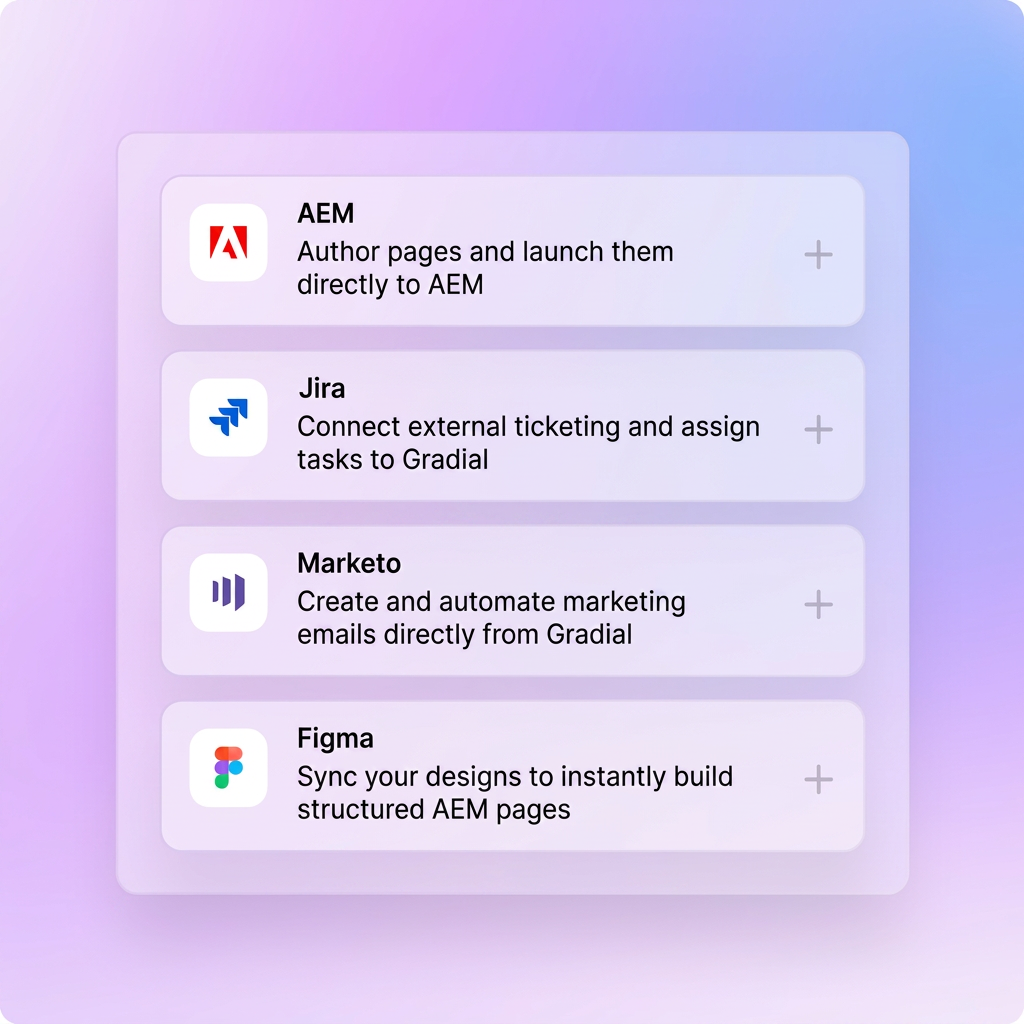
Gradial is designed for this middle layer. It works across the systems enterprises already use, including the CMS, DAM, workflow system, design tools, and campaign platforms. Gradial agents execute the operational work while shared context, permissions, approvals, and evidence stay inside the workflow.

The goal is not to replace the stack. It is to make the stack operate as one governed system of work. Production, localization, metadata, migration, QA, and activation can move through connected workflows without relying on people to carry context across every seam.

That is also the role of agentic content infrastructure: keep the brand, rules, business context, and execution memory durable while the agents and models using that context continue to evolve.

Strategy should know what is load-bearing

The balance worth planning for in 2026 and 2027 is strict where the enterprise needs lasting control, and composable where the market demands speed.

Enterprises that get this right are not skipping strategy. They are spending planning budget on the foundation, then applying judgment to which parts of the stack should move quickly and which backlog items should not wait.

Strategy still matters. It just needs to know which parts of the stack are load-bearing and which ones are meant to change every quarter.

Explore the Gradial platform or read the agentic marketing operations guide.

Build a stable foundation without freezing execution

See how Gradial connects context, governance, people, agents, and tools across the work between brief and live.