





Use approved source material
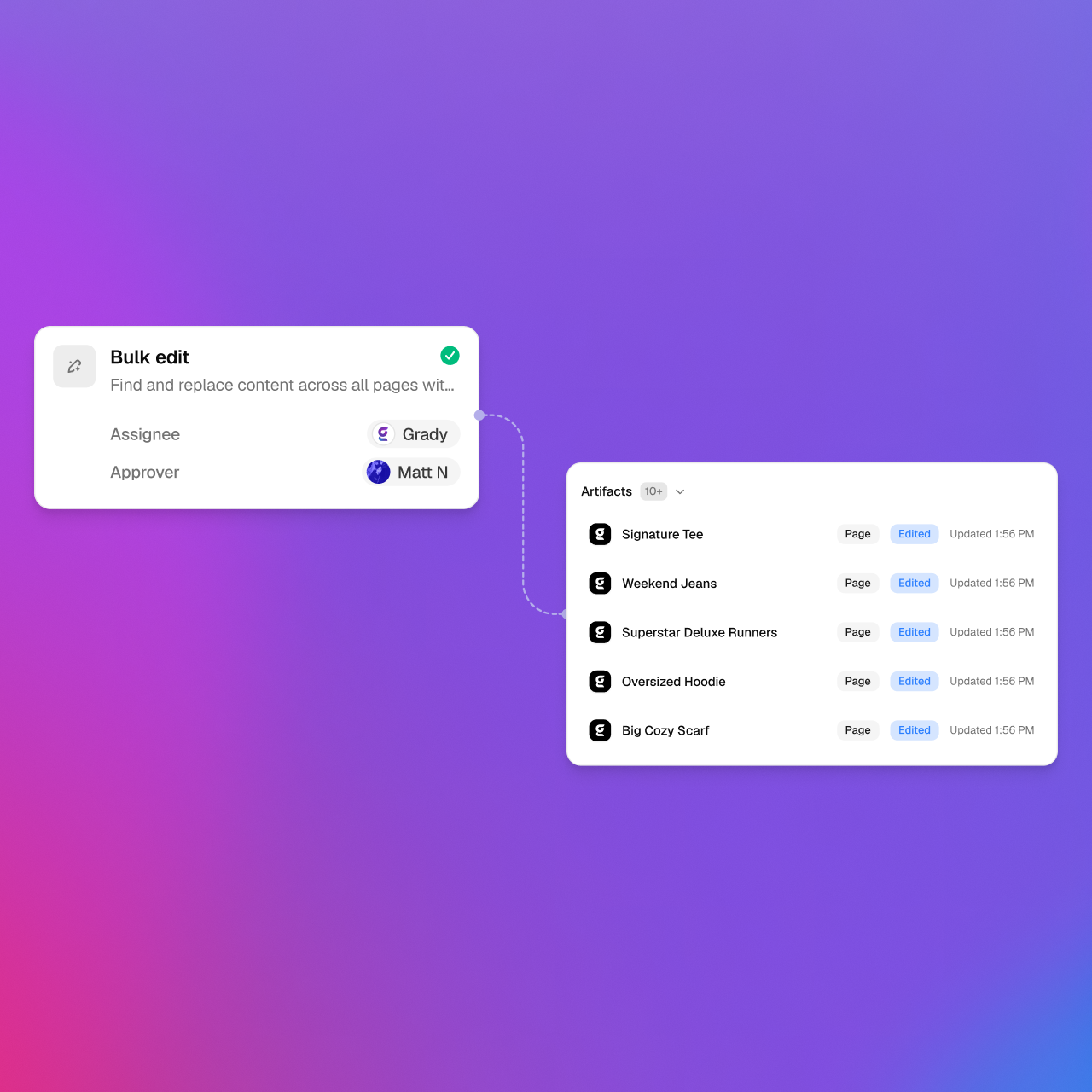
Start with the material your team already approved, including briefs, copy documents, Word or SharePoint files, and Figma designs.
Start with the material your team already approved, including briefs, copy documents, Word or SharePoint files, and Figma designs.
Gradial resolves the page family, then maps headings, body copy, calls to action, proof, metadata, and assets to supported fields and components.
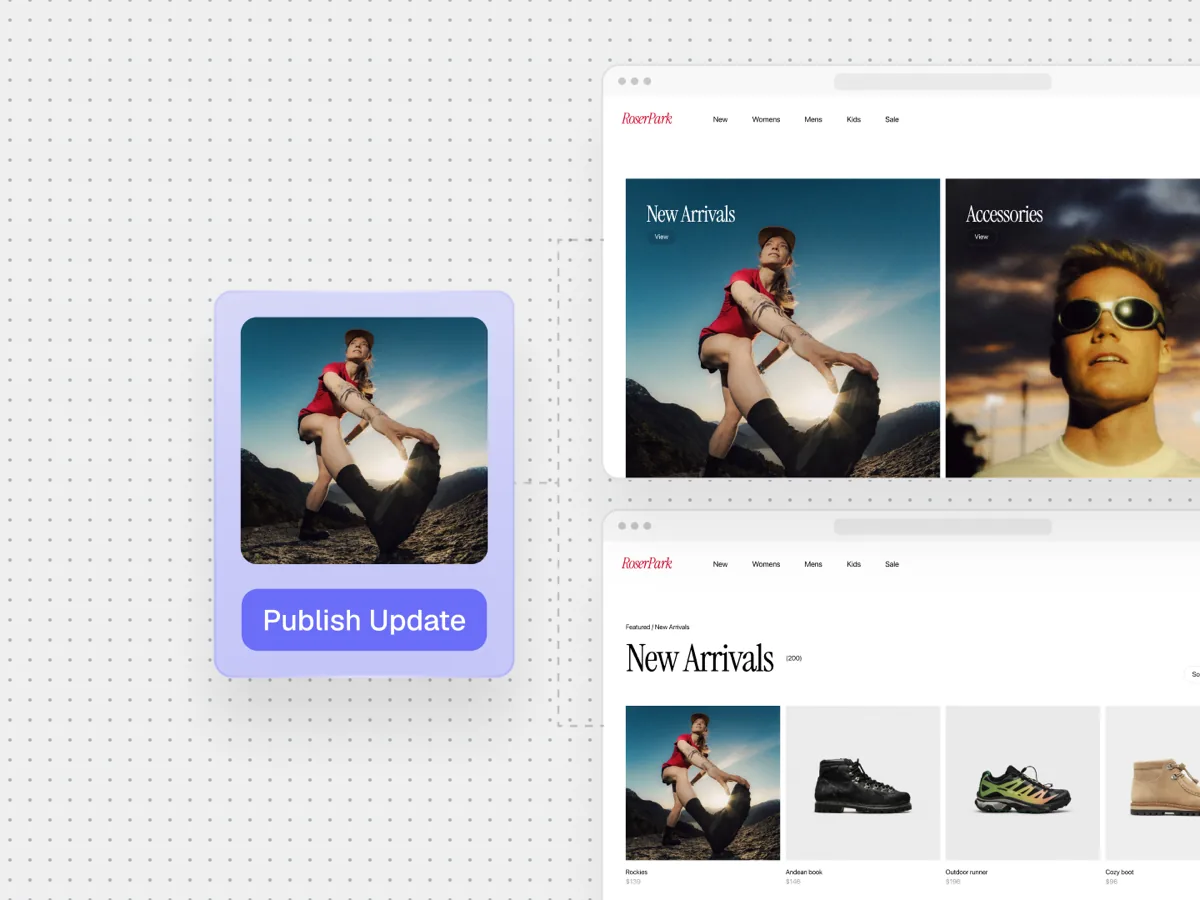
Gradial creates the structured draft in the connected CMS with the approved template, component policy, content model, and asset references intact.
The workflow checks the stored change and the rendered experience, surfaces unresolved decisions, and prepares the page for accountable human review.
A generated draft is only an input. Governed authoring carries approved material into the destination system with the controls, evidence, and review needed for a customer-visible page.
Reuse supported templates, components, fields, references, and taxonomy instead of inventing off-system layouts.
Keep product facts, customer proof, source copy, design direction, and review requirements traceable throughout the workflow.
Separate draft preparation from publication authority, and require the reviewers your organization assigns before release.
This workflow is designed for teams whose strongest ideas and approved copy still stall in the operational path to a reviewable web experience.

Move approved copy into structured CMS drafts without turning web operations into a retyping function.
Increase authoring capacity while preserving content models, component policy, metadata standards, and review gates.
Hand off approved direction with its context intact, then review a real page instead of another intermediate document.
AWS shows what changes when approved direction can move through page production with fewer manual handoffs.

AWS page creation could take roughly ten hours per page before Gradial.
With Gradial agents embedded in the workflow, pages could be completed in about thirty minutes.
The change created a 20x improvement in page creation for complex enterprise content operations.
Gradial maps approved content and design direction to the templates, components, fields, and references supported by your content model. If the requested experience cannot be represented safely, the workflow surfaces the decision instead of inventing a component.
The workflow uses the source file as approved direction, then resolves its content, structure, and design cues against the destination model. Ambiguity becomes a review decision, not an unsupported guess.
No. Gradial is designed to execute in connected marketing systems and adapt to the destination content model, workflow, permissions, and environment policy.
Connect approved source material, design direction, asset operations, ticketing, and CMS execution through one governed workflow.
AEM Sites & Assets
Contentful
Drupal
Sitecore
Figma
Sharepoint
Word
Bynder
Jira
Sign up to receive product releases, execution insights, and real-world use cases from the Gradial system of work.