

AI Summary
- Generation was never the constraint on enterprise creative output. Review was, and it still is.
- Gradial is the enterprise marketing harness that applies brand, policy, market, and language rules during creation, verifies the output, and attaches the evidence to the asset.
- Assets arrive reviewable. Brand, market, and channel review happen together, once, instead of once per variant.
- One marketer produced this launch campaign in one afternoon. This is what making marketers superhuman looks like in practice: output compounds without adding headcount.
The bottleneck is not the first asset
Generation made it easier to produce a first version. It did not remove the operational work that follows: brand review, market adaptation, localization, channel resizing, approvals, and delivery into the systems where campaigns go live.
AI content creation makes the first asset cheap. It does nothing about the operational tax pushed onto brand, localization, channel, and review teams downstream. More assets, same review capacity, longer queue. A team that can suddenly produce 40 market variants still can't ship 40 market variants, because nobody can approve 40 of them one at a time.
That overload has fueled a proliferation of AI slop and audience fatigue that is actively detrimental to brands. More output is not leverage when it dilutes quality, consistency, and trust.
The fix is not skipping review. It's arriving reviewable.
Governed execution is the counterweight to slop. Gradial remixes high-caliber brand creative across channels and markets while applying your brand, policy, market, and language rules as the asset is made. Then it verifies the result, records what it checked, flags what needs a human, and sends that evidence forward with the asset.
The reviewer stops reconstructing context and starts making a decision. And because the whole variant set carries the same evidence, brand, market, and channel review happen together, once, rather than repeating per asset. That is where the queue actually gets shorter.
Human approval is still required before anything publishes. Governed does not mean unattended.
Gradial is the enterprise marketing harness for this execution layer. It runs inside the stack you already standardized, turning brand context and governance into action instead of adding another queue of recommendations.
See Gradial in action
Create, localize, adapt, verify
Gradial is a system of action, not another system of record. It connects four jobs in one governed workflow.
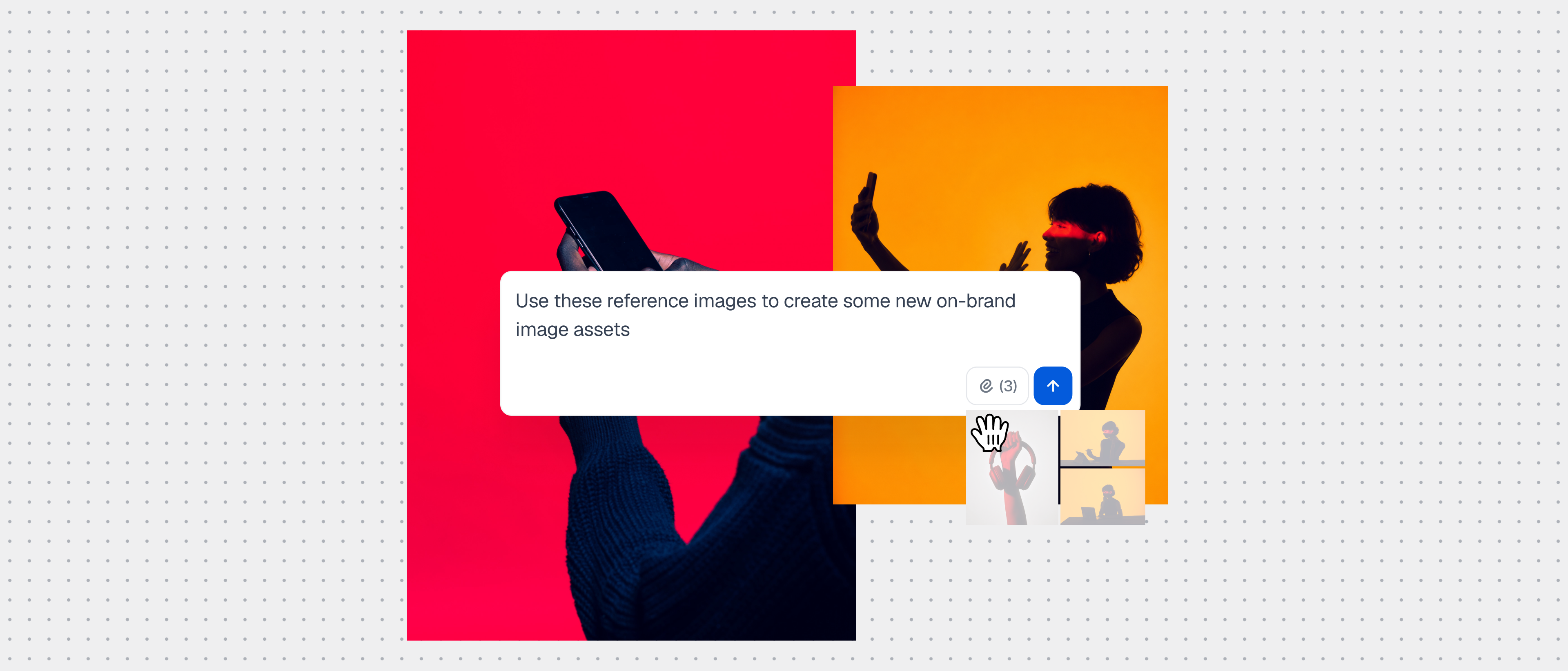
- Create. Generate short marketing videos and still images from a campaign prompt. Edit existing images, blend references, build new concepts.
- Localize. Translate talking-head video, preserve the speaker's voice style, lip-sync replacement audio, translate visible text, rebuild the final market version.
- Adapt. Reframe assets for landscape, vertical, square, web, email, social, and display placements while keeping the subject and brand system consistent.
- Verify. Run brand, policy, market, format, and language checks throughout. Gradial records the results, flags exceptions, and sends the evidence with the asset into human approval.
Verify is the one that changes the economics. The first three make assets. The fourth makes them reviewable. Gradial executes the messy work between intent and approval instead of stopping at insight.
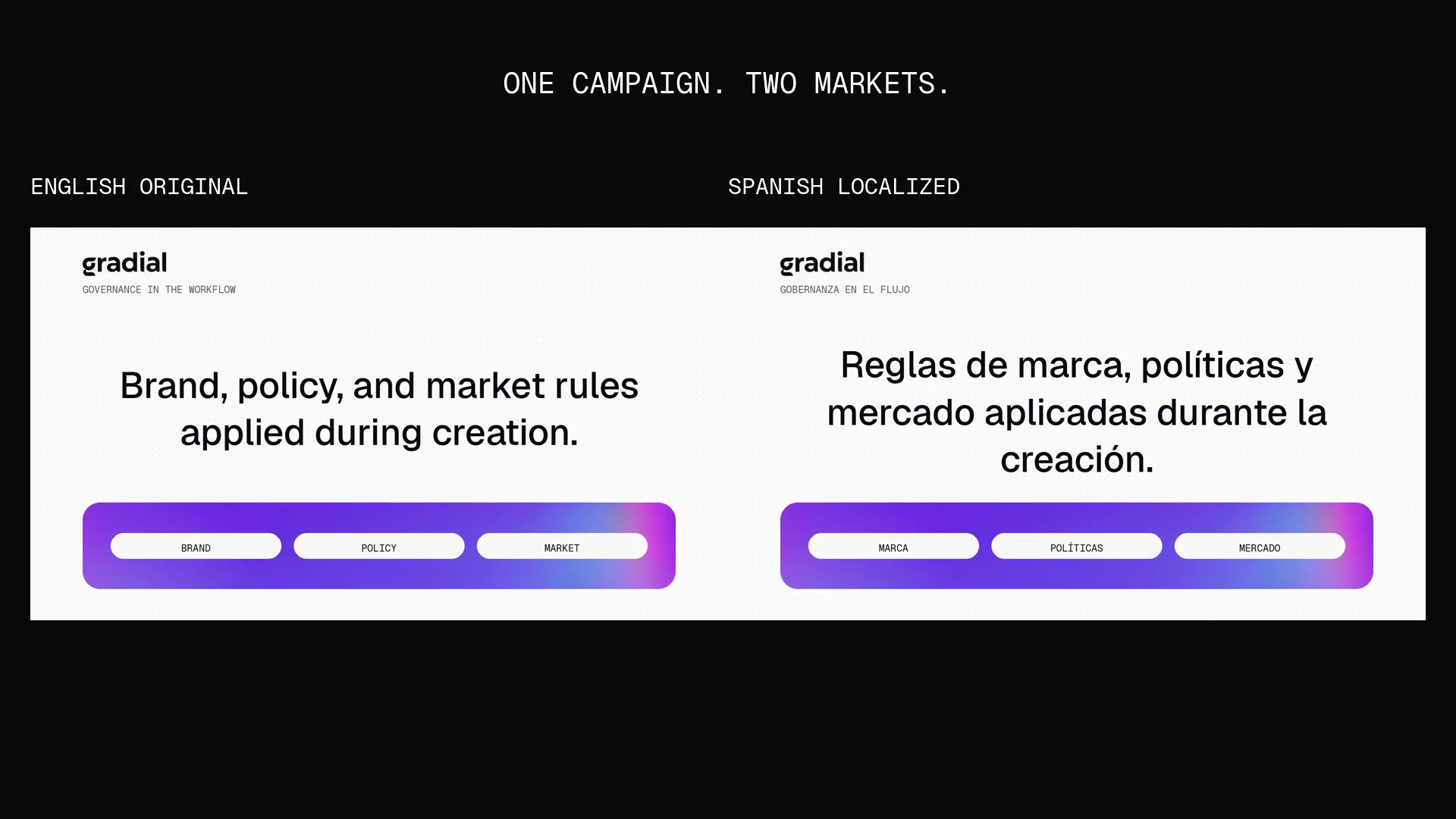
One campaign. Two markets.
This is the same campaign asset in English and Spanish, produced as one connected workflow. Gradial translated the audio in the speaker's own voice, matched mouth movement to the new track, and rebuilt the on-screen text in the target language, then re-scanned the final output to confirm no source-language text remained before market review.
Built for the people responsible for shipping the work
Creative and brand directors keep brand rules, craft standards, and final sign-off inside the workflow, and hand off the resize-and-variant work. Web and CMS managers receive channel-ready media with the formats, context, and review state the destination needs. Marketing operations leaders get a system of action that works inside the stack they already standardized, instead of another folder of assets to reconcile. CMOs get limitless execution capacity without limitless headcount, while governance stays built into the work.
What one marketer shipped in one afternoon
These are not platform benchmarks. This is the production log from this launch campaign, completed by one marketer on our team in one afternoon using Gradial. This is what making marketers superhuman looks like in practice.
- Three source images became nine campaign variations.
- Six reference images became six distinct campaign concepts in one prompt.
- Five existing images expanded into new aspect ratios for additional placements.
- Six marketing videos, about 32 minutes of source footage, moved through the localization workflow.
The number that matters is not the asset count. It's that the whole set reached brand, market, and channel review together, with its verification evidence attached, instead of arriving one at a time as separate review requests. One marketer went from a small set of source assets to a multilingual campaign system without turning every variant into its own production project. The output compounds while headcount stays fixed.
Available in early access
These capabilities are available in early access with enterprise design partners, and will continue to expand across media formats, localization workflows, and connected publishing systems.
Take the work out of your workflow. See the English and localized campaign side by side, then talk with your Gradial team about the channels, markets, and governance requirements your organization needs to support.
Get updates from where the work gets done
Product news, execution insights, and real-world use cases from the Gradial system of work.