








Validate intake
Classify the request, confirm approved inputs, identify the destination, assign owners, and define the evidence required before work begins.
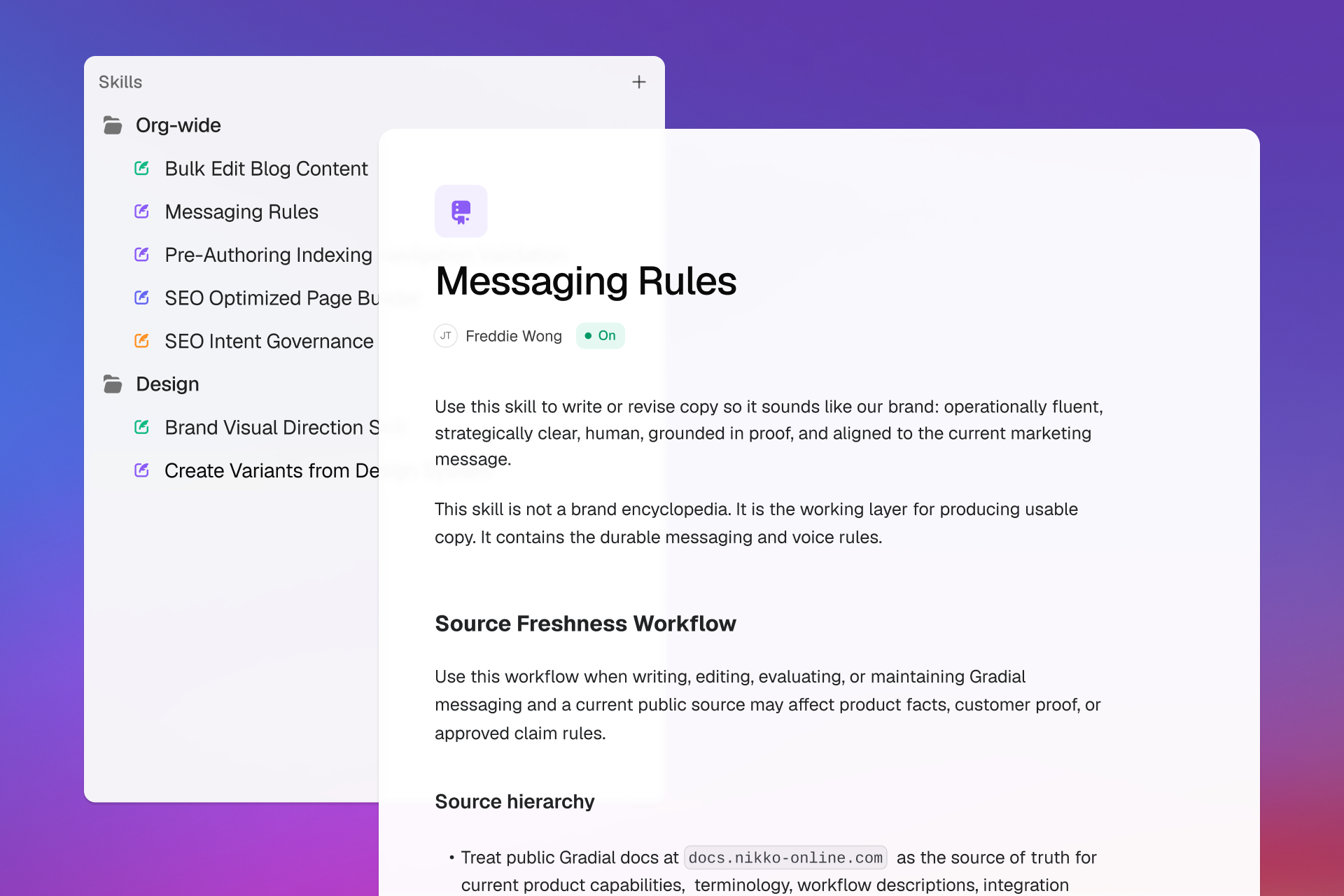
Enterprise marketing teams rarely lack ideas or tools. Work stalls in intake, system handoffs, page assembly, metadata, quality assurance, approvals, localization, and release coordination. Marketing operations automation should remove that execution drag without removing accountability.
Gradial connects the people, agents, systems, context, and controls required to move marketing work through one governed execution path.
Classify the request, confirm approved inputs, identify the destination, assign owners, and define the evidence required before work begins.
Map dependent and parallel steps across teams, agents, systems, review points, budgets, and stop conditions.
Create and update pages, campaign assets, metadata, tickets, email content, and other supported work where the final result belongs.
Apply approved brand, accessibility, content, metadata, link, and policy checks while the work is still repairable.
Attach source, changes, checks, previews, exceptions, and the requested decision to the accountable reviewer before release.
Can the platform create or update the intended result in the CMS, DAM, workflow system, email platform, or other connected destination?
Can it apply approved brand rules, product facts, content models, taxonomy, workflow knowledge, and prior decisions?
Can it manage dependencies, permissions, budgets, human assignments, exceptions, approval gates, and recovery paths?
Can reviewers see what changed and why, and can the organization measure cycle time, quality, rework, throughput, and cost per verified outcome?
T-Mobile shows what changes when marketing operations automation executes the work instead of adding another coordination layer.

A large T-Mobile campaign that historically required roughly 1,000 to 1,200 cumulative hours over a month was executed in about 80 hours with humans focused on QA. The published customer story reports a 90% improvement in time to market for campaign execution.
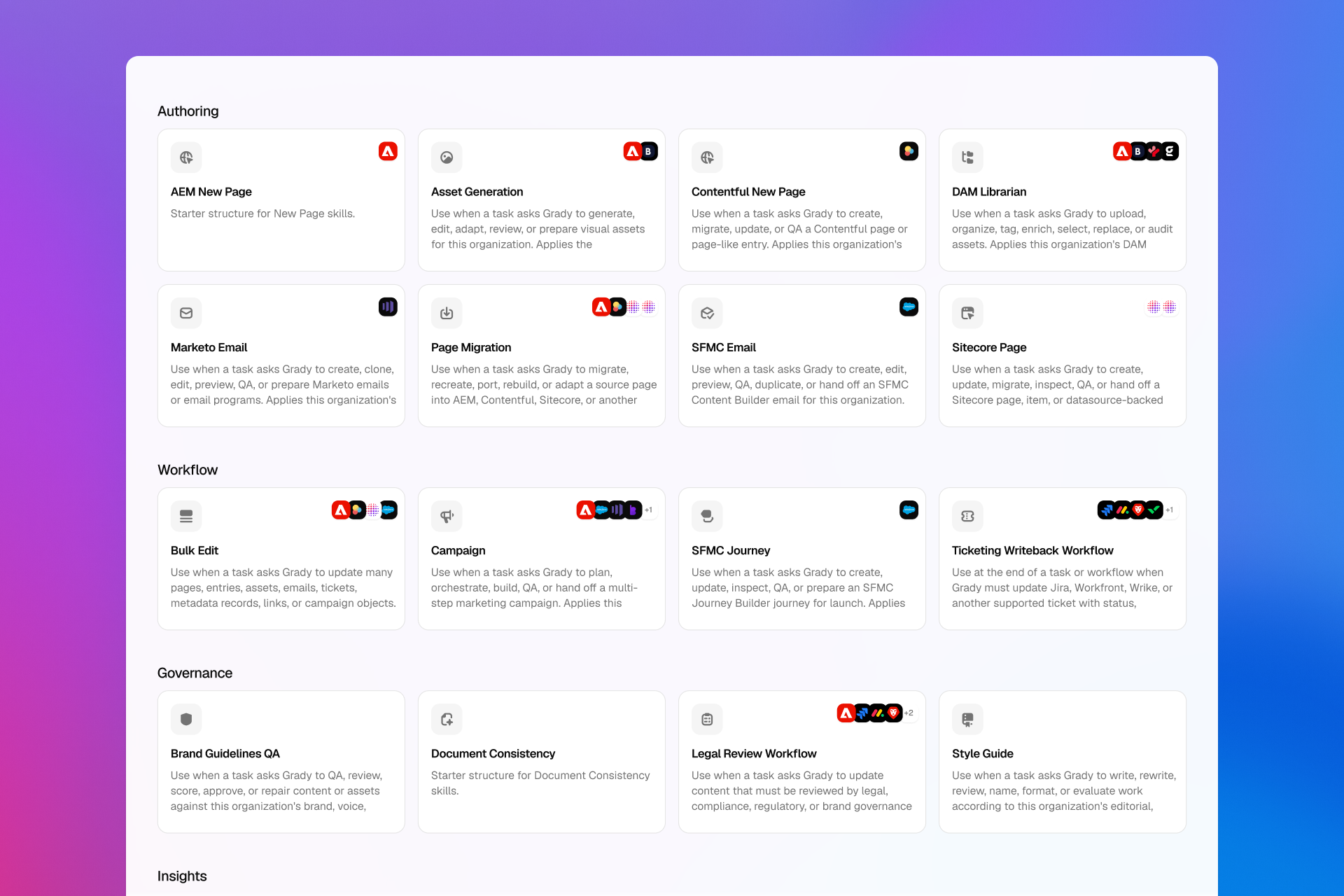
Gradial combines reusable context, workflow orchestration, native execution, governance, and visible proof so automation produces completed work rather than disconnected tasks.
Coordinate execution across content, assets, tickets, creative sources, data, campaigns, and approvals without replacing the systems teams already trust.
AEM Sites & Assets
Contentful
Drupal
Jira
Sharepoint
Sitecore
Word
Workfront
Sign up to receive product releases, execution insights, and real-world use cases from the Gradial system of work.