

Approved direction gets rebuilt
Teams manually map copy, links, images, settings, and audience requirements into the email service provider after the brief is already complete.
Email operations
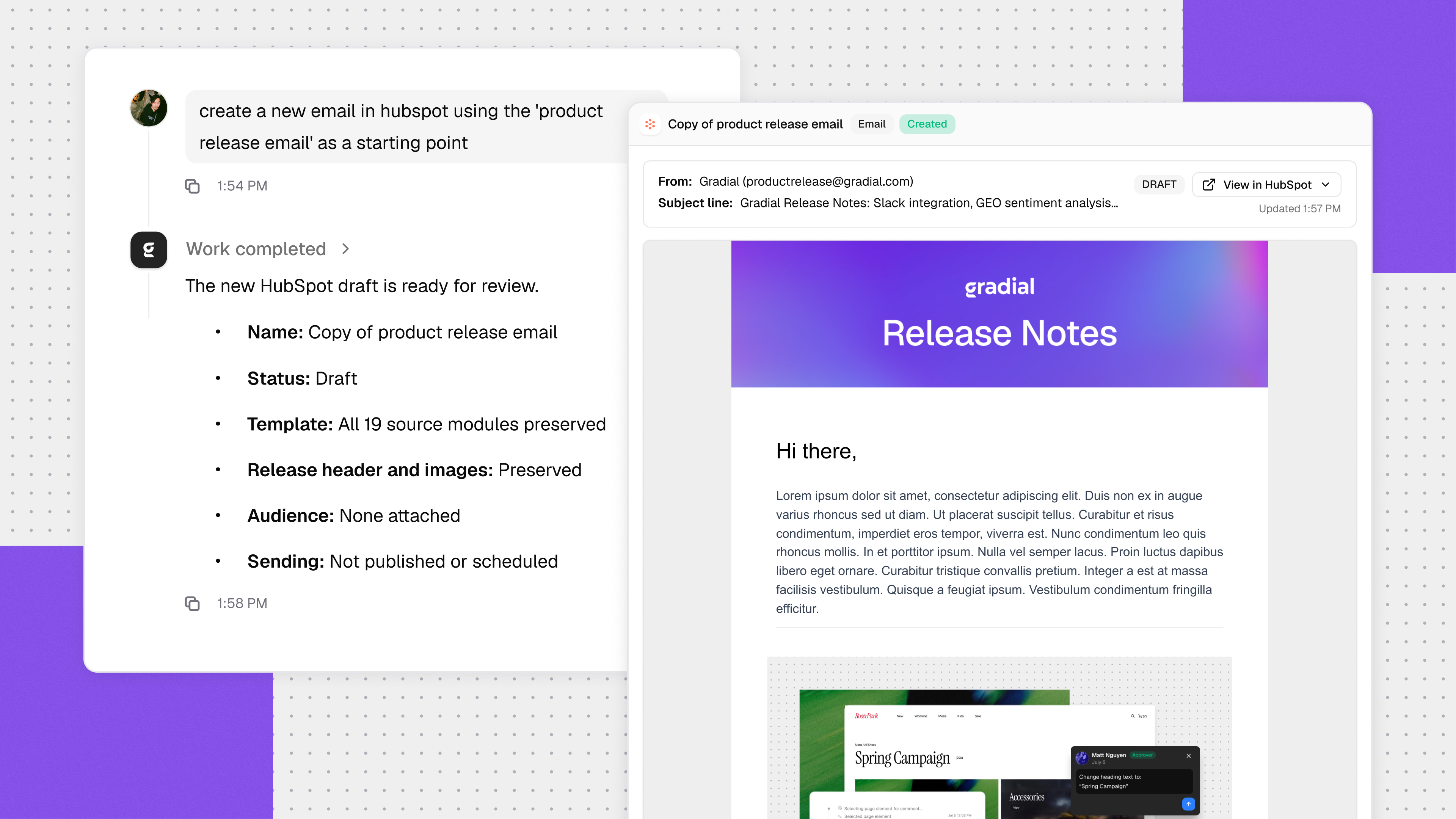
Gradial turns approved briefs and copy into reviewable email drafts inside your existing email service provider (ESP). Email and lifecycle teams keep their templates, systems, and approval process while Gradial handles more of the production work.
The strategy and copy may already be approved, but production starts over inside the email service provider. Every send becomes a manual assembly, checking, and coordination project.
Teams manually map copy, links, images, settings, and audience requirements into the email service provider after the brief is already complete.
Every segment, market, test, and language version creates another round of assembly and review.
Brand, link, disclosure, accessibility, and personalization issues surface late, which sends the email back through production.
Web, audience, asset, and email teams rebuild the same campaign direction in separate systems, increasing drift and coordination work.
Gradial carries approved campaign direction into the email service provider, assembles the draft from supported structures, runs configured checks, and prepares the work for human review.
Bring approved copy, a campaign brief, a design reference, or an existing email pattern. Gradial identifies the content, settings, links, variants, and reusable elements required for the build.
Gradial creates or updates the email inside your connected email service provider using its supported templates, modules, content blocks, snippets, and tokens.
Create audience, regional, testing, or localized versions from the same approved source while preserving the structure and standards that should stay consistent.
Check supported links, required disclosures, accessibility, personalization elements, and configured brand rules before the draft reaches a human reviewer.
Review the rendered draft in Gradial or your email service provider, then use the approval and activation path your organization has configured. Sending remains a separate governed action.
Gradial takes on the repeatable production work between approved direction and final review. Your team keeps ownership of strategy, copy direction, creative judgment, and the send decision.
Create and update email assets directly in the email service provider your team already uses, working with its supported templates, modules, reusable blocks, and settings.
Build segment, test, regional, and localized versions while maintaining shared structure, required content, and brand standards.
Use rendered previews where the connected platform supports them, with final review completed in the email service provider when needed.
Keep the email tied to its brief, web experience, audience setup, asset source, approval path, and task history instead of rebuilding context at each handoff.
Build from the templates, modules, reusable content, tokens, and sender settings your team already governs.
Use a rendered draft for review, then complete any required final checks in your email service provider before activation.
Carry approved email assets into supported campaign and journey workflows without rebuilding the content or losing the original brief and review context.
Drafting, review, publishing, and sending remain distinct actions, with the approvals and permissions your organization chooses at each step.
Move approved copy into reusable email structures without rebuilding each send by hand.
Increase the number of segment, regional, testing, and localized variants the team can prepare and review.
Bring email production into the same governed system of work as web, campaign, asset, and approval operations.
Gradial connects the source material, email production, audience context, lifecycle workflow, and approval process without requiring another system of record.
Create and update governed email drafts where your team already manages templates, send settings, and activation.
Keep segment context, campaign structure, and supported lifecycle steps connected to the email asset.
Carry approved direction from the documents, designs, and asset libraries your teams already use.
Preserve the review gates, task history, permissions, and ownership model already governing the work.
Gradial works with the templates, modules, reusable content blocks, snippets, and tokens supported by your email service provider. Your approved structure remains the starting point.
No. Your team owns the message, offer, audience strategy, and creative judgment. Gradial handles more of the assembly, variant production, configured checks, and review routing inside the connected workflow.
Yes. The same brief can coordinate supported web, email, audience, asset, and workflow tasks while each connected system continues to enforce its own permissions and approval steps.
Gradial can create localized email variants while preserving shared structure and configured standards. Translation quality, market requirements, legal lines, and final approval remain part of the review model you define.