
What Is an Agentic Harness? The Enterprise Guide to Reliable AI Agents
An agentic harness, also called an agent harness or AI agent harness, is the scaffolding around an AI model and its agents that makes real work reliable and repeatable. It supplies the tools, integrations, context, memory, workspace, and guardrails needed to move from a goal to a verified result.
The model provides reasoning. An agent takes action. The harness determines what the agent can reach, what it knows, what it remembers, where work in progress lives, which checks apply, and when a person must decide.
This guide defines the broad category. For the domain-specific implementation, continue to What Is an Enterprise Marketing Harness?
What is an agent harness?
An agentic harness is the operating environment around one or more AI agents. Six foundational parts turn model capability into repeatable work.
| Part | What it provides | Why it matters |
|---|---|---|
| Tools | The actions an agent can take | The agent can perform the work rather than only describe it |
| Integrations | Authenticated, permissioned access to business systems | Work happens in the systems of record under controlled access |
| Context | Current facts, instructions, policies, patterns, and job inputs | The agent acts from business-specific knowledge |
| Memory | Approved corrections, prior outcomes, and reusable learning | Every job does not start from zero |
| Workspace | Drafts, artifacts, review state, and long-running job progress | People and agents can coordinate across systems and time |
| Guardrails | Permissions, checks, budgets, approvals, and stop conditions | Autonomy stays bounded by business risk |
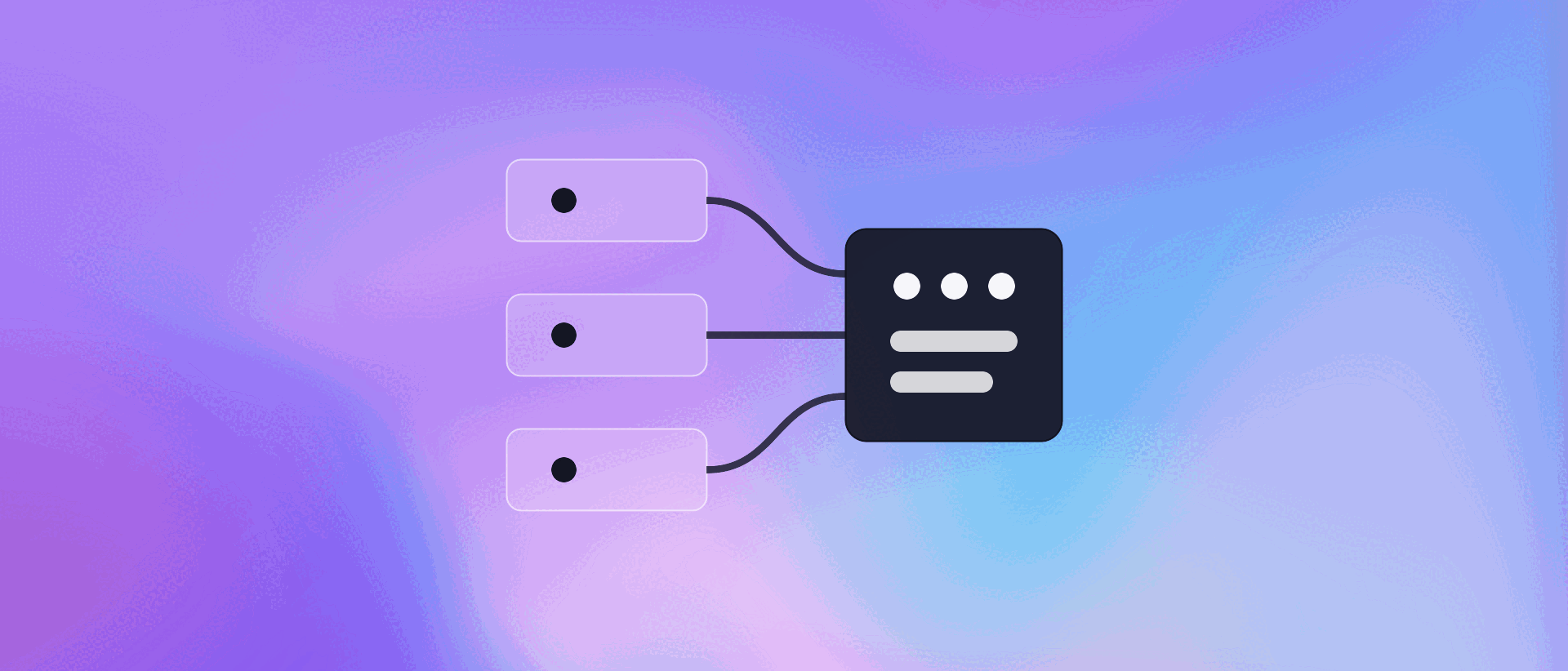
Orchestration, observability, and verification connect these parts into an operating system. They coordinate the steps, preserve evidence, and confirm that the intended result actually exists.
Agentic harness, agent harness, AI harness, and marketing harness
Agentic harness, agent harness, and AI agent harness describe the same core concept: the engineered layer around a model and its agents. AI harness is sometimes used as shorthand, but it can also refer more broadly to AI infrastructure or evaluation systems.
| Term | Best use | Scope |
|---|---|---|
| Agentic harness | Broad category term | Tools, integrations, context, memory, workspace, and guardrails around models and agents |
| Agent harness | Common technical shorthand | The runtime and controls that make an agent useful and reliable |
| AI agent harness | Expanded term for general audiences | The same concept with the AI relationship made explicit |
| Enterprise marketing harness | Domain-specific implementation | The same scaffolding specialized for marketing systems, standards, approvals, and lifecycle execution |
This page owns the broad agentic harness definition. The enterprise marketing harness guide owns the marketing-specific operating model.
Why agents need a harness in the enterprise
A controlled demo usually has a clean input, a narrow task, and a person ready to correct the result. Enterprise work has none of those guarantees. Inputs can be incomplete. Systems hold different versions of the truth. Permissions vary by role and environment. A downstream action can affect customers, financial reporting, regulated content, or production systems.
- Context drift: The agent receives stale facts, incomplete policy, or a different version of the brief.
- Tool risk: The same connection that lets an agent read a system may also let it change or publish something.
- Workflow failure: One successful task does not coordinate dependencies, exceptions, or recovery across a larger process.
- Review ambiguity: A person sees an output but cannot tell which source, action, or check produced it.
- Learning loss: Corrections stay in one conversation instead of improving future work.
A harness addresses these gaps before an agent receives more autonomy.
How an agent harness works
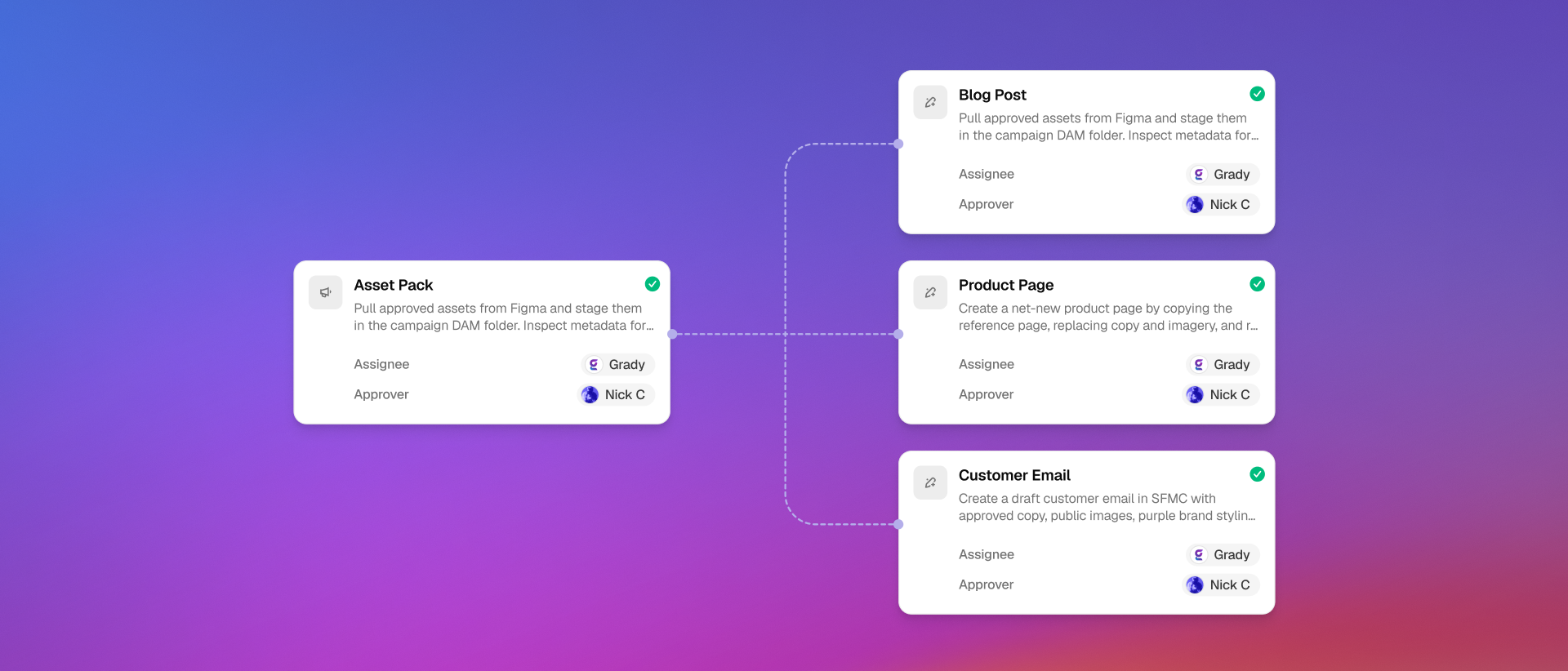
- Accept a governed request. The harness captures the goal, owner, scope, approved sources, target systems, risk, and definition of done.
- Assemble the right context. It selects current business facts, policies, procedures, examples, and prior decisions for this job.
- Plan and route the work. It turns the request into steps, assigns the right agents or people, and respects dependencies.
- Execute through controlled tools. Each agent receives only the systems and actions required for its task.
- Check progress and exceptions. The harness validates outputs, records failures, applies retry limits, and stops when judgment is required.
- Request human decisions. Reviewers receive the source, change, evidence, risk, and exact decision needed.
- Verify the result. Completion means the intended result exists in the system and, when relevant, appears correctly to the end user.
- Preserve learning. Approved feedback and outcomes improve the reusable operating context for future work.
Where agent harnesses apply across the business
The architecture is not limited to software development. Any business function with repeatable work, multiple systems, governed decisions, and a measurable outcome can benefit from a harness.
- Marketing: Coordinate briefs, content, assets, CMS work, email builds, QA, approvals, launch, and measurement across the marketing stack.
- Customer service: Assemble account context, recommend or perform allowed actions, preserve escalation rules, and document resolution.
- Sales: Prepare account research, update approved records, coordinate follow-up, and keep humans on relationship and commercial decisions.
- Finance: Reconcile defined inputs, prepare review packages, flag exceptions, and maintain an audit trail without handing policy decisions to the agent.
- Legal and compliance: Route defined reviews, compare content against approved policy, attach evidence, and escalate interpretation to accountable experts.
- IT and operations: Diagnose known patterns, execute bounded changes, validate system state, and stop before consequential actions.
How to evaluate an agent harness
Evaluate the harness by the work it can complete reliably, not by how many agents it can launch.
- Context quality: Can it use current, approved, attributable business knowledge?
- End-system execution: Can it act in the systems where work happens, with separate read, draft, edit, approve, and release permissions?
- Workflow control: Can it manage dependencies, blocked work, parallel tasks, retries, and human ownership?
- Governance: Can policy, cost, data access, and release authority be applied during execution?
- Observability: Can reviewers see sources, actions, changes, failures, spend, and final state?
- Verification: Does it confirm the actual business result rather than stopping after a tool reports success?
- Learning: Can approved corrections become reusable guidance without exposing uncontrolled memory?
How Gradial applies the agentic harness model to marketing
Gradial is an enterprise marketing harness and the marketing operations system of work for enterprises. It applies agentic harness scaffolding to the systems, standards, approval paths, and lifecycle that marketing actually runs on.
- Tools and integrations reach the marketing stack: Authorized agents can work across connected CMS, DAM, ESP, analytics, collaboration, design, commerce, and workflow systems.
- Context and memory travel with the work: Brand guidance, product facts, source material, page patterns, workflow rules, and approved corrections apply where they matter.
- A shared workspace preserves progress: Drafts, artifacts, owners, dependencies, reviews, and job state remain connected across multi-step work.
- Guardrails shape execution: Permissions, quality checks, evidence, human reviews, and release controls are part of the workflow.
- Outcomes are verified: Gradial checks stored state and the visible experience before treating customer-facing work as complete.
The next guide explains how this architecture covers the path from an approved marketing decision to a verified customer experience: What Is an Enterprise Marketing Harness?
Sources and terminology review
This guide was updated on August 31, 2026 using Gradial’s current product definition in What Is an Agentic Harness?, alongside current public explanations of agent harness architecture.
- Microsoft Agent Framework, “Agent Harness”: defines the harness as runtime scaffolding that manages model and tool calls, context, approval policies, observability, and multi-step progress.
- Databricks, “What is an AI Agent Harness?”: describes shared harness infrastructure across tools, memory, execution environments, guardrails, evaluation, and enterprise observability.
- LangChain, “The Anatomy of an Agent Harness”: frames the agent as the combination of model and harness, including system instructions, tools, infrastructure, orchestration, and deterministic checks.
The updated Gradial definition treats tools, integrations, context, memory, workspace, and guardrails as the six-part foundation. Terminology and implementations continue to evolve, so teams should evaluate operating controls and verified outcomes rather than the label alone.
What a strong agent harness makes possible
- Agents work from shared, approved context instead of isolated prompts.
- Autonomy expands by workflow risk, not by enthusiasm for a demo.
- People review decisions and exceptions instead of reconstructing routine work.
- Every consequential action carries evidence, ownership, and a recovery path.
- The organization measures verified outcomes, quality, cost, and risk rather than agent activity.
- Apply the model to marketing: See the systems and controls a marketing harness needs.
- Evaluate enterprise marketing agents: Compare use cases, readiness, governance, and ROI.
- Map a governed workflow: Identify one recurring process where a harness can create reliable capacity.