Insights
From Terminal to Touchpoint: Fixing the Content Supply Chain in Transportation and Hospitality




Insights
Transportation and hospitality organizations span automotive, air, land, sea, logistics, travel, and lodging. Yet they face the same reality: content is now mission-critical and increasingly difficult to manage.
Operational complexity is rising. Regulatory and safety requirements continue to expand. Global networks of partners, properties, fleets, and routes must stay aligned. Expectations for clear, timely, and consistent communication have never been higher.
As a result, both the volume and velocity of content have exploded. Updates, regulatory communications, service documentation, marketing content, training materials, and executive messaging must be created, governed, and delivered across dozens of channels and touchpoints.
This is the modern content supply chain challenge. Content sits at the center of operations, experience, and trust. The systems behind it remain fragmented, manual, and difficult to scale.
Across transportation and hospitality, the same structural issues appear again and again:
These challenges are not isolated to a single mode of transport or segment of hospitality. They are systemic across asset-heavy, experience-driven, highly regulated enterprises - and they intensify as organizations grow.
Gradial approaches content as an end-to-end supply chain rather than a collection of disconnected assets and workflows.
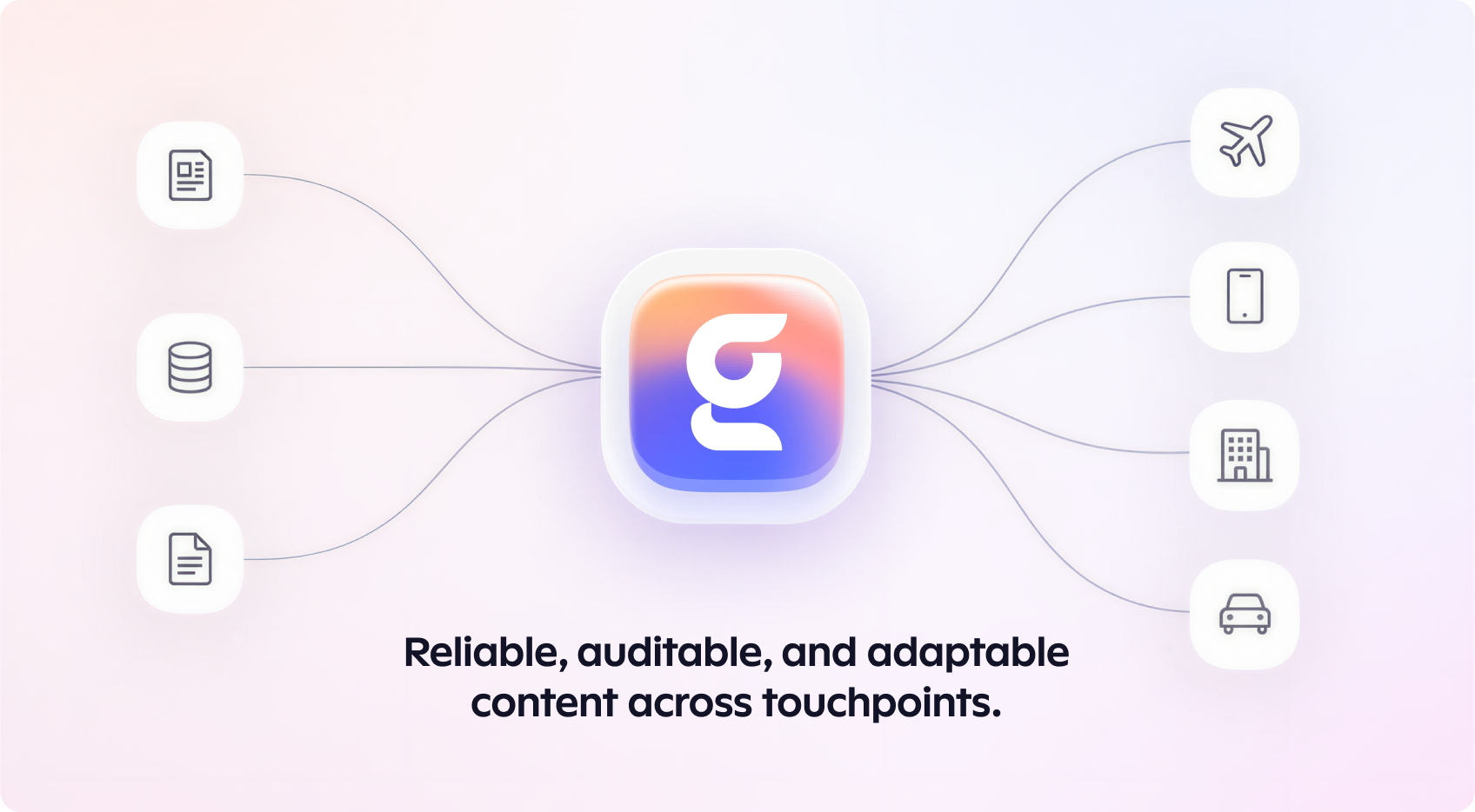
Instead of asking teams to move faster within broken processes, Gradial provides an orchestration layer that connects subject-matter expertise, structured inputs, governance rules, and AI-assisted generation into a single, controlled system of flow.
With Gradial, organizations can:
The outcome is not just faster content creation, but more reliable, auditable, and adaptable content across the enterprise.
The applications vary by segment, but the underlying need is the same.
In automotive and mobility, organizations must communicate rapidly evolving vehicle capabilities, safety standards, and service information while maintaining consistency across global markets and dealer networks.
In air, land, and sea transportation, teams must respond quickly to operational changes, regulatory requirements, and customer communications across routes, terminals, fleets, and partners.
In logistics, clarity and timeliness of content directly impact efficiency, coordination, and customer trust across complex global supply chains.
In hospitality, brands must align guest experience, property operations, safety standards, and marketing across locations while enabling frontline teams with accurate, up-to-date information.
Different experiences. Same requirement: a resilient, intelligent content supply chain that scales with the business.
The most forward-looking transportation and hospitality organizations are changing how they think about content.
Rather than treating it as a downstream marketing task or operational afterthought, they recognize content as a strategic capability - one that influences agility, compliance confidence, guest and passenger trust, and operational performance.
Modernizing the content supply chain reduces risk, eliminates rework, and empowers teams to focus on delivering exceptional experiences rather than managing information.
Gradial exists to help transportation and hospitality leaders make that shift - without compromising accuracy, safety, or control.
Head of Industry - Automotive | Transportation | Hospitality
Todd is Head of Industry at Gradial and a seasoned growth leader with 20+ years of experience across consumer goods, retail, automotive, and manufacturing. He focuses on helping enterprise teams turn strategy into execution through innovation, technology, and customer-centric operations.