
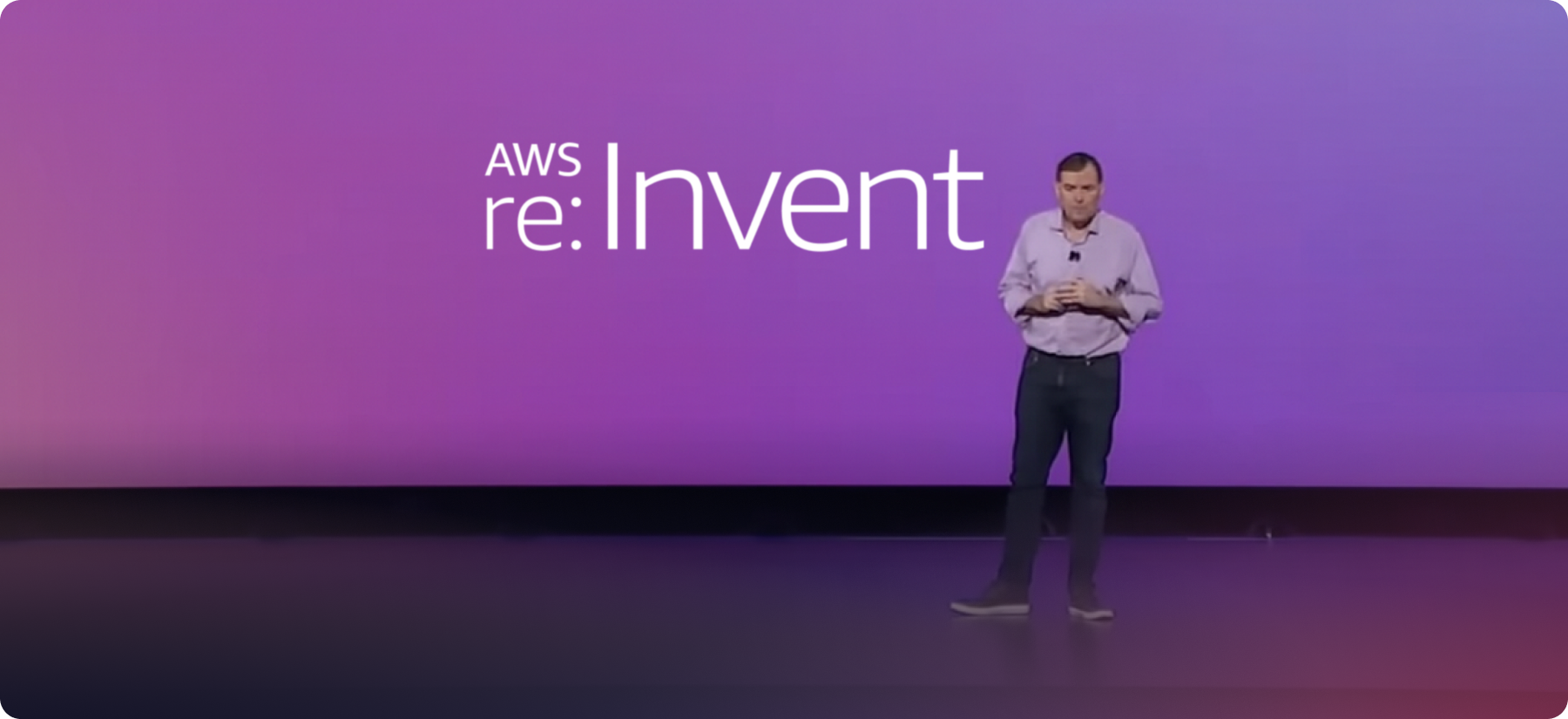
This year at AWS re:Invent, Gradial had a breakout moment. Anup was featured at the keynote stage by Matt Garman, to show how enterprise marketing teams can finally move at the speed of ideas—not tickets—by running agentic AI directly on AWS. Early deployments have already helped large enterprises cut content cycle times from weeks to hours.
Insights
Gradial at AWS re:Invent 2025: Building an Agentic Content Supply Chain on AWS
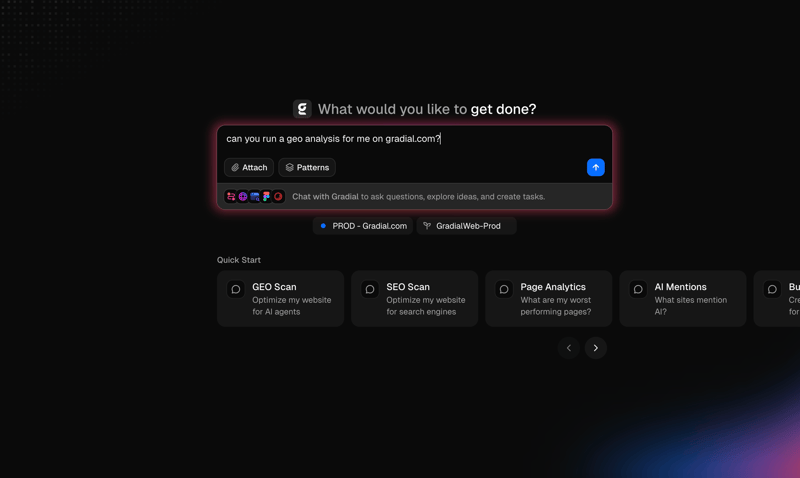
Why content ops is still the bottleneck
For most large enterprises, the slowdown in marketing isn’t a lack of creative ideas. It’s the manual content supply chain wrapped around every brief—turning what should be simple updates into multi-day slogs and new experiences into multi-week projects.
- Dozens of handoffs between designers, copywriters, engineers, and web strategists
- Fragmented tools across CMS, DAM, ticketing, and legal/compliance
- Manual tagging, accessibility checks, and QA before anything can go live
In many organizations, a simple content update can take 3–4 days. New pages can take 4–6 weeks and up to 20 distinct steps, while multi-channel campaigns consume hundreds or even thousands of hours. Marketing teams end up spending most of their time on execution logistics instead of strategy and creativity.
What Gradial showed on stage
In the Startup Stories video and keynote mention, Anup walked through how Gradial tackles this problem with an agentic AI platform built on AWS:
- Gradial connects creative, content, and operations systems so work flows from idea to action instead of stalling in tickets, with an orchestration agent on AWS deciding which specialist agents to use—authoring, Figma-to-code, Sitecore, AEM, QA, and more—to complete a task end-to-end.
- Along the way, agents make recommendations on how content can convert audiences better and faster, not just how to get it published.
The core point: the biggest slowdown in marketing isn’t creativity, it’s the manual supply chain wrapped around every piece of content. Gradial’s goal is to remove that friction so marketers can spend their time on higher-value work.
Why AWS, Bedrock, and Nova matter
A major theme of the re:Invent story is that we live in a multi-model world. There isn’t one model that fits all use cases, especially in complex enterprise environments. Gradial’s platform is built to take advantage of that:
- Amazon Bedrock provides secure access to multiple foundation models, so each agent can use the model best suited to its job.
- Nova models power key workflows such as turning JIRA tickets into AEM or Sitecore updates and analyzing full customer journeys on the web.
- Nova Act enables “buyer agents” that simulate how different customers navigate a site, measure how many clicks it takes to find critical information, and suggest changes to improve the experience.
- Our latest release uses Nova models to help marketers build copy and templated emails in Marketo and Salesforce Marketing Cloud. Early case studies show 95% efficiency gains in email creation time.
This model flexibility lets Gradial use efficient models for routine execution and more powerful, reasoning-heavy models when a task requires deeper analysis or complex decision-making. AWS’s investment in startup success and enterprise-grade security has been crucial in making this viable at Fortune 500 scale.
The proof: An AWS case study
The AWS case study published alongside re:Invent puts concrete numbers behind the story:
- Gradial runs primarily on AWS infrastructure and serves enterprises like T-Mobile, Prudential Financial, and AWS itself.
- The platform automates page and email creation, content updates, campaign QA, SEO governance, brand compliance, accessibility checks, and digital journey mapping.
- Customers have seen up to 20x efficiency gains and 99.9 percent accuracy in content operations by orchestrating AI agents across CMS, DAM, JIRA, Adobe Workfront, and other systems.
For AWS and T-Mobile, this translated into dramatic reductions in time-to-market while maintaining strict quality and compliance standards. The case study reinforces that Gradial isn’t just automating individual tasks; it is reshaping the entire content supply chain.
What this means for marketing leaders on AWS
For VPs and Directors of Marketing who run on AWS, the re:Invent moment underscored a few key takeaways:
- Your bottleneck is likely the operational layer, not the creative one.
- You can use AWS infrastructure, Bedrock, and Nova models to let AI agents execute across your existing tools instead of rebuilding your stack.
- Agentic AI can compress cycle times from weeks to hours while preserving governance, compliance, and brand quality.
Gradial’s vision is simple: marketing teams should spend their time on the work humans do best—strategy, storytelling, and creativity—while agents handle the repetitive execution required to ship experiences at scale.
For marketing leaders who want to explore this on their own AWS environment, the next step is simple: run a 60–90 day pilot on one high-friction workflow—such as AEM or Sitecore page updates or SFMC/Marketo email creation—and measure how agentic content operations compress cycle times from weeks to hours.

Jonathan Spatacean
Strategic Account Director
Jonathan is a Strategic Account Director at Gradial, partnering with enterprise teams to adopt agentic marketing and streamline the way they execute content and campaigns. He focuses on helping customers turn Gradial’s platform into real operational impact across speed, scale, and quality.